Borde Este | by Ivan Breyter
...



In a world dominated by image, how do we go about recognizing the native soundscape of the Río de la Plata? On an auditory walk, the ears stay alert, consciously gathering information. This project sets out to be an essay in acoustic ecology —that is, the study of the sounds of an environment in relation to life and society.
Acoustic ecology, a concept developed by R. Murray Schafer, the Canadian composer and writer, focuses mainly on the perception, composition, and characterization of soundscapes. Sounds can be understood as a public tale of the social world. They can be observed and described as an expression of the way we live together and share our common everyday environment.
On certain points along the coast of the Río de la Plata in the city of Buenos Aires and its relationship with the water, observing the effects of the acoustic environment and of the creatures that inhabit it. By studying a specific territory, we seek to identify its characteristic sounds —proper to a particular moment or activity— together with nature’s own unique tones, in order to determine its soundtrack.
Thanks to the technological tools available today, it is possible to sample a sound field in order to store sounds that, over time, will tend to disappear. These recordings make it possible to preserve acoustic elements that, if not recorded, could not be faithfully reproduced in the future. While we could turn to literary or journalistic works to reconstruct the sounds of past eras, it is clear that this would be a mental reconstruction, inevitably biased by the individual perception of whoever narrates or reads.
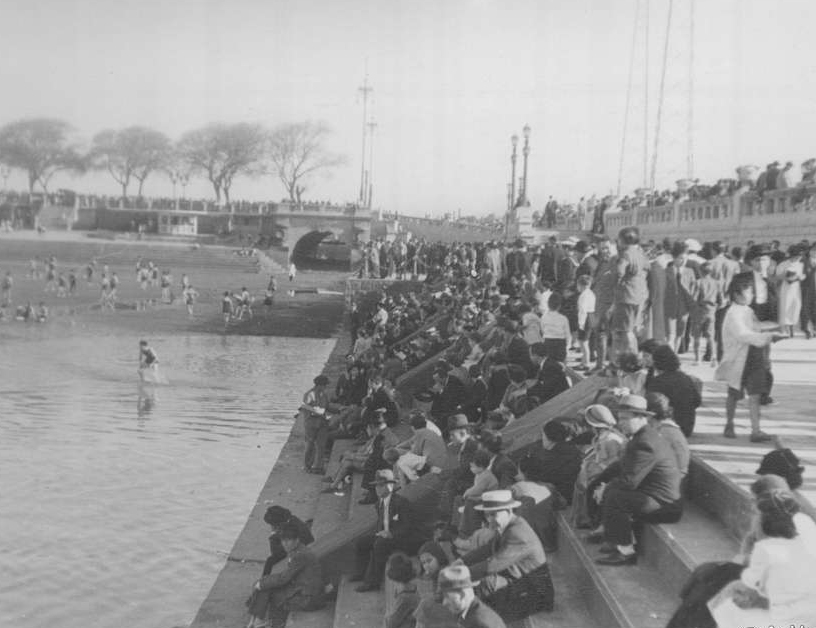
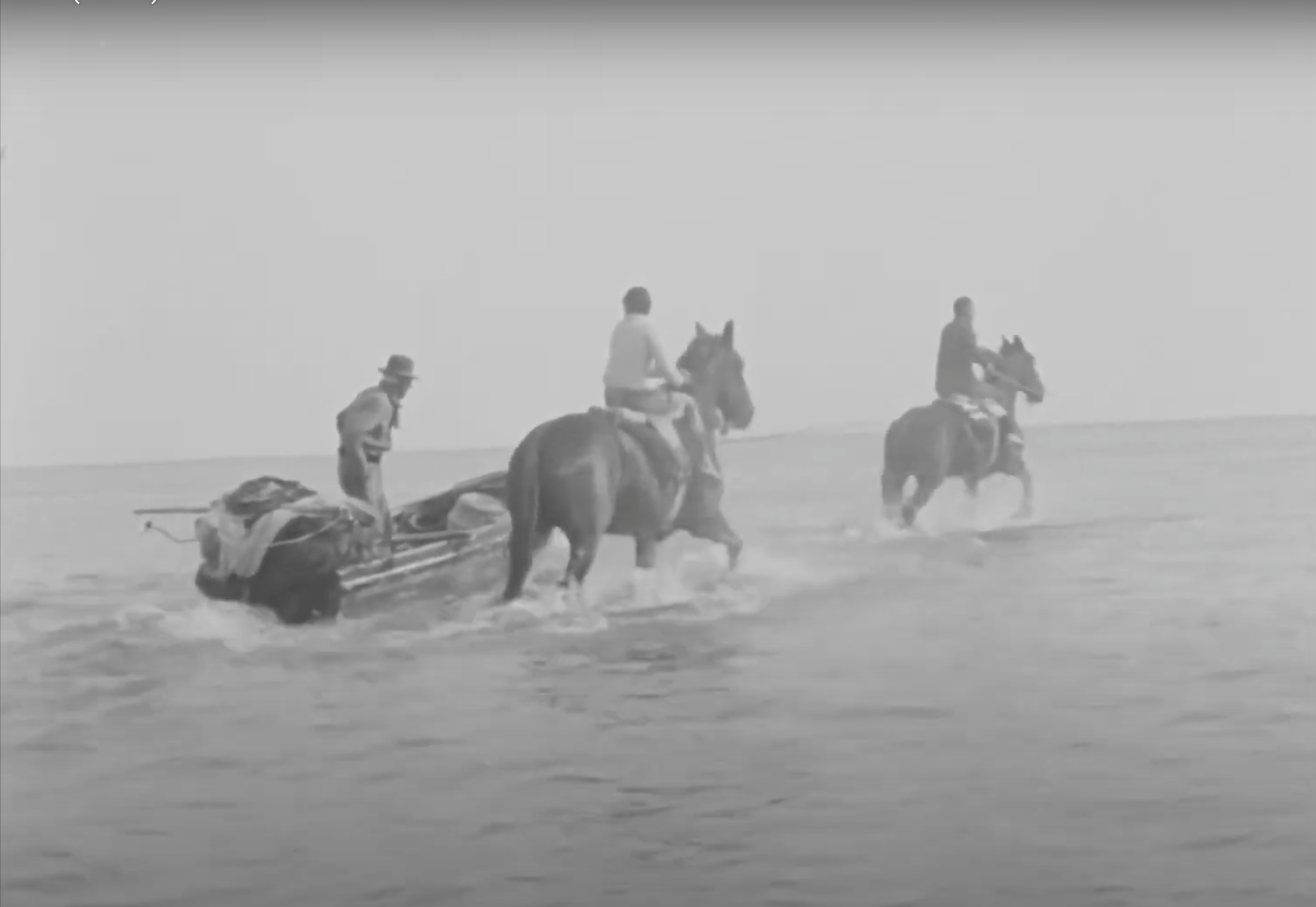
“Hombres de río” (“River Men”) is a short documentary film by film students from the University of La Plata in 1965, made with photographic records of a group of fishermen using horses to spread their nets and drag their boats along the riverbank. The filming has no ambient sound, so we can only imagine the sound the net makes as it is cast, or the gallop of a horse along the riverbank —an acoustic event that will probably never happen again in the context of the city.
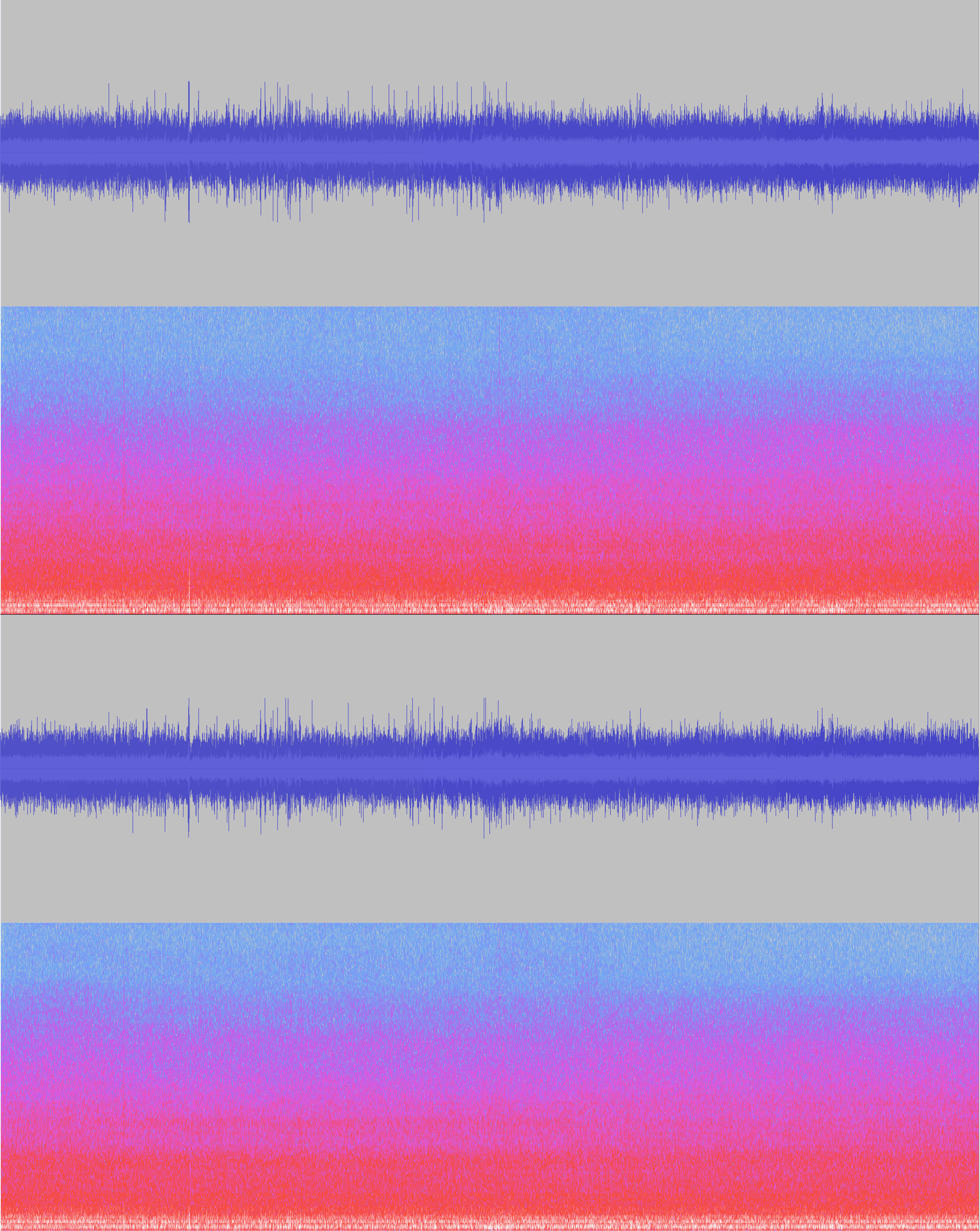
One way of preserving auditory events is through notation systems, whether textual descriptions or graphic representations of sound (spectrograms and oscillograms). An oscillogram shows the variations of one or more sound sources in relation to time and amplitude (intensity). In an open sound field, auditory perception inevitably carries with it the notion of space. The oscillogram on its own is insufficient to represent the enveloping quality of sounds arriving from different directions.
When the grid began to impose itself on the cartographies of the city of Buenos Aires, promoting ideas of regularizing the territory, the construction of a “mental image” took shape.
“This mental image produced by Enlightenment rationality operated as a lens through which the streams, the basins, and the differences in topographic level could only be seen as an irregularity to be smoothed away.” 1
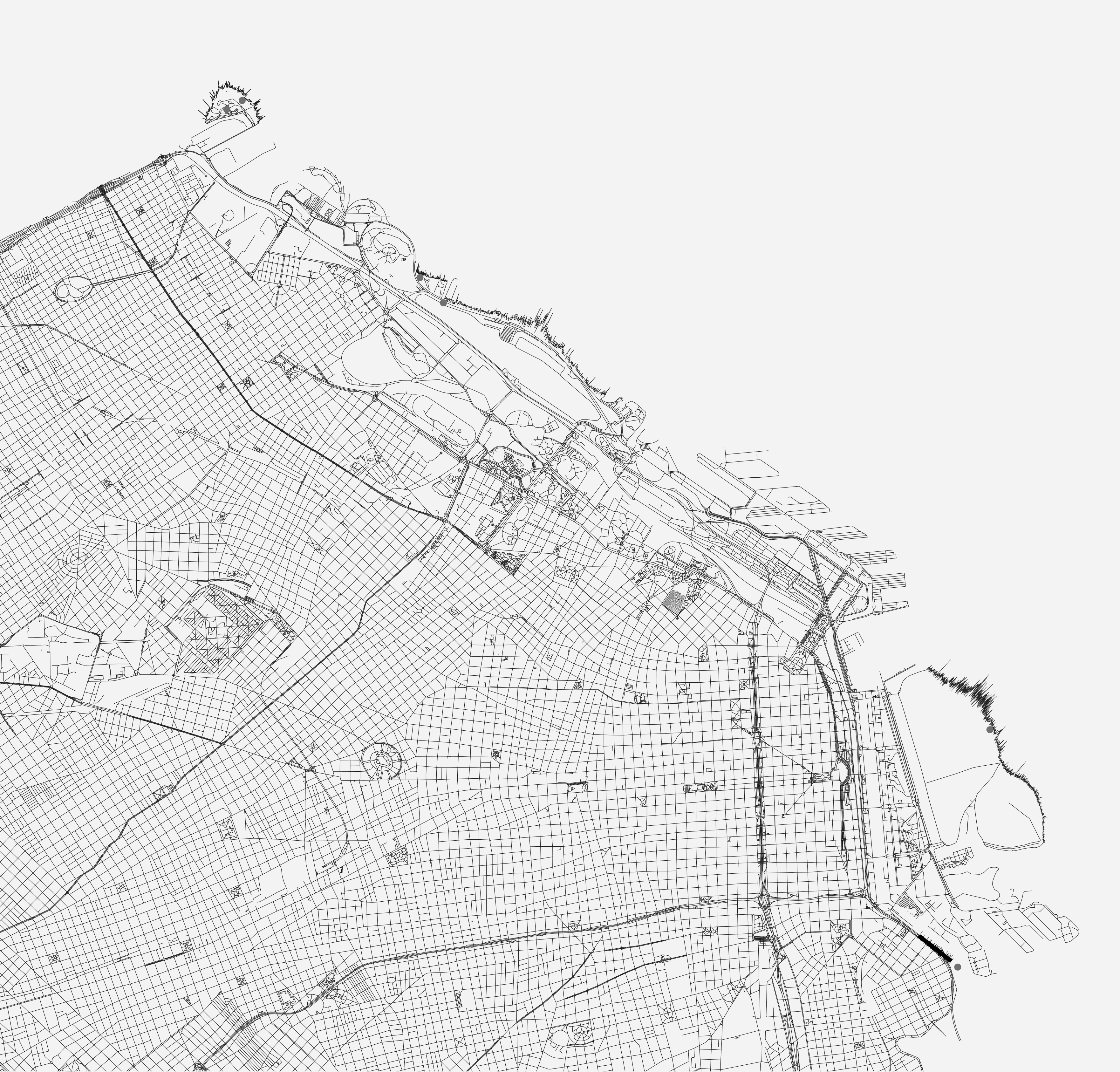
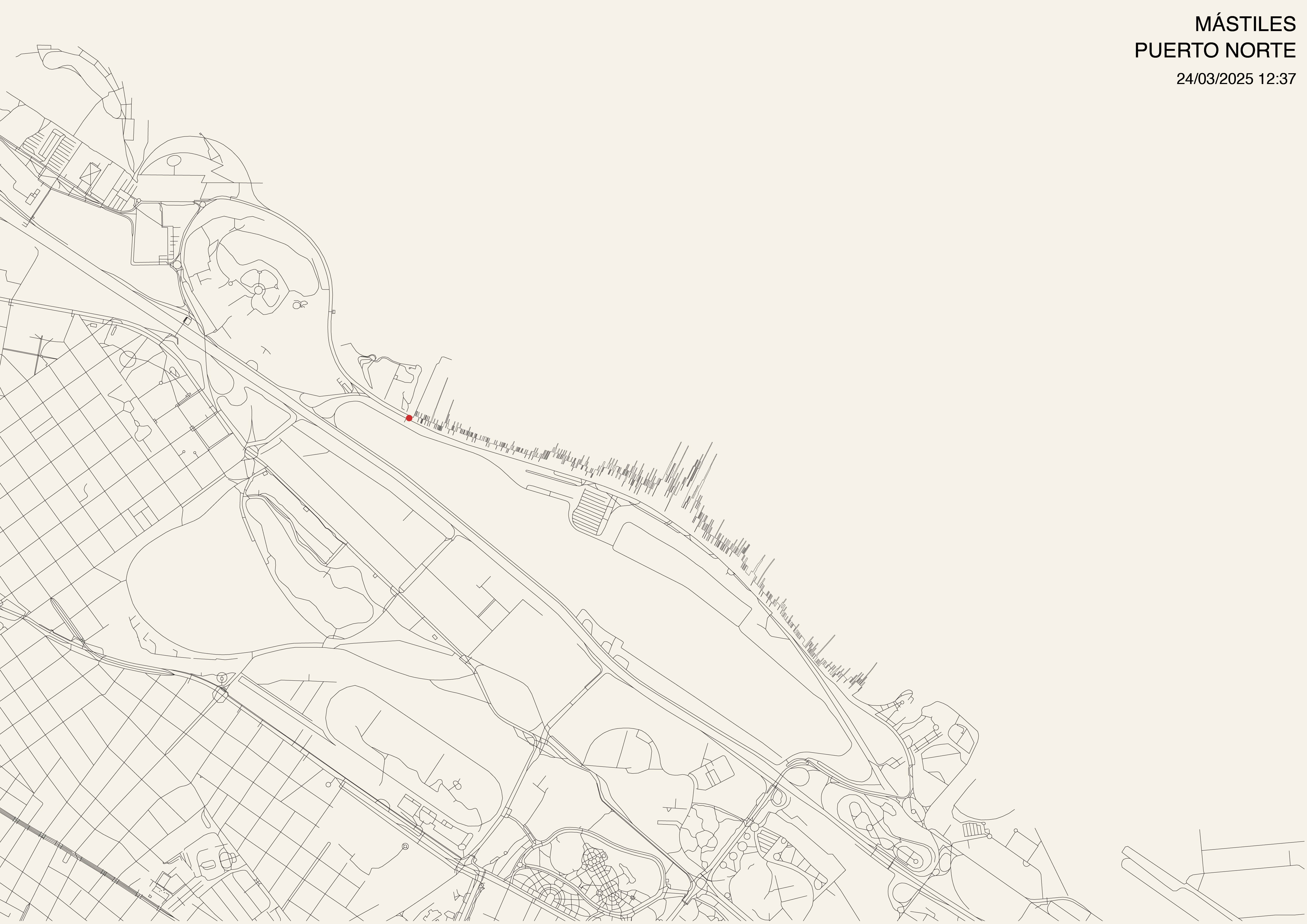
In the search for a more precise representation of auditory perception within an open sound field, the proposal arises to break the regularity of the traditional maps of the river coast, incorporating the variations recorded in each oscillogram as structural components of the territory.
To generate this sound archive, all kinds of sounds were considered, even those that seem insignificant or worthless. The musician Brian Eno, in an interview conducted by the producer Rick Rubin, describes how he uses random processes as a creative tool:
“The interesting thing about randomness is that sometimes it takes you to places you didn’t expect to go, and sometimes those places turn out to be really interesting and new.”
Speaking of the On Land series of ambient records, Brian Eno writes:
“(…) many times I found myself sitting in the afternoons in the yard with the microphone set to capture the widest possible area, recording ambient sounds from every direction. Then I would listen to the result on my headphones. This simple technological system had the effect of grouping all the disparate sounds into a single auditory frame: they became music.”²
1. The territories where samples will be collected are determined.
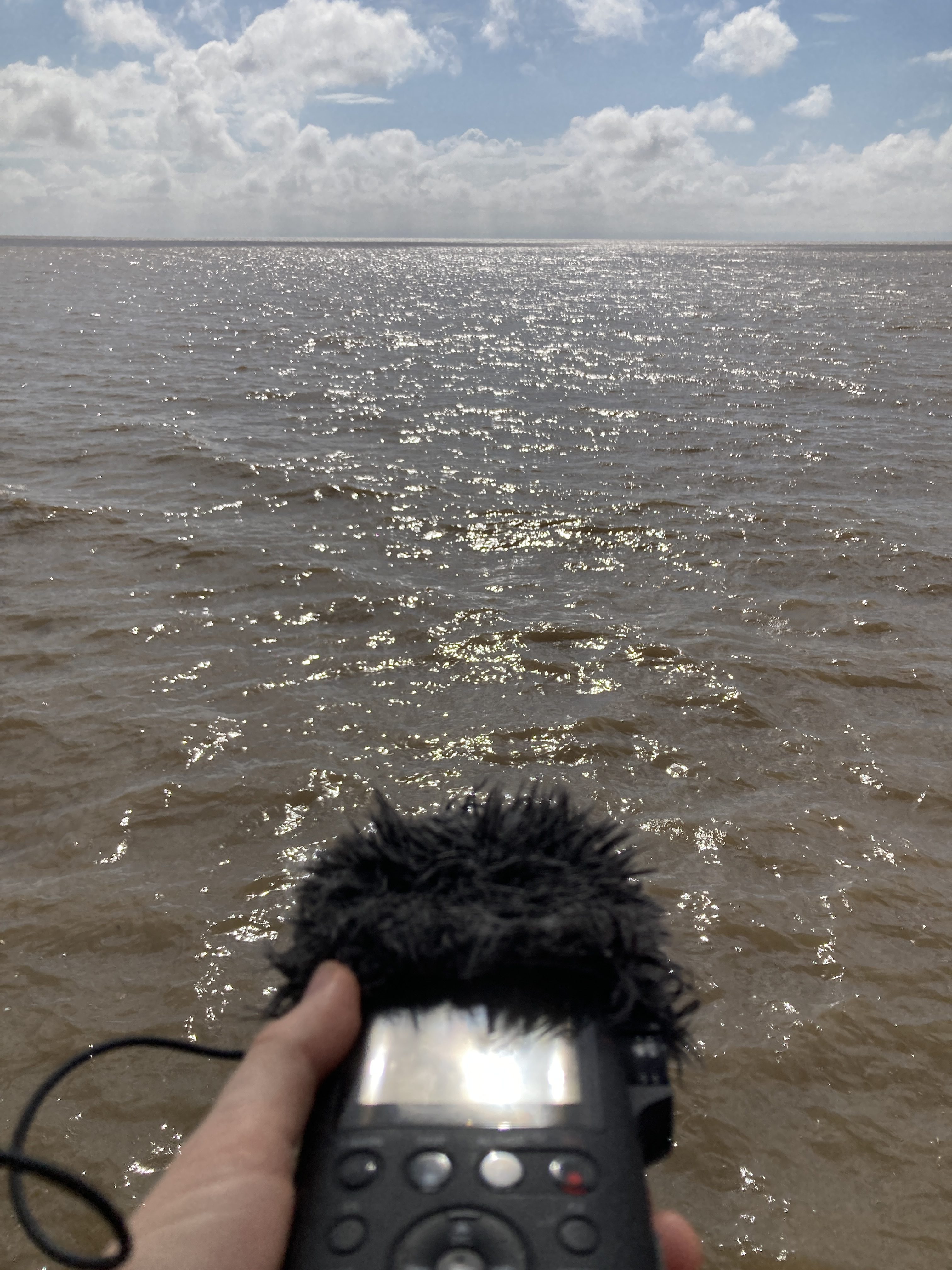
2. Using a portable recorder, random samples lasting between 2 and 3 minutes are taken.
3. Simultaneously, with a sports- or action-type camera (that is, without a screen to preview the shots), a video is recorded to serve as visual support.
4. Using audio-editing software, graphic representations of the sound —spectrograms and oscillograms— are obtained.
5. The oscillogram of each sample is taken and incorporated into the city plan.
6. A deep listening of the recorded audio is carried out.
7. Using audio-editing software, a musical piece is generated, taking elements from the samples obtained and adding instrumental layers.
8. Finally, the captured video is overlaid with the musical piece.
For the construction of these pieces, three main elements of the soundscape developed by researcher R. Murray Schafer are used as a structure:
Keynote: determined by the background sounds, generally heard unconsciously, which form the base of any landscape, such as the wind or traffic.
Sound signals: the sounds found in the foreground. A shout, an airplane, the barking of a dog.
Soundmarks: the sounds characteristic of a specific area; those that acquire a symbolic and affective value and constitute the sonic traces that make the acoustic life of each place unique.
Sound Field: Puerto Norte
Date: Monday 25/04/2025
Sample time: 12:40
Location: -34.551950, -58.426480
Keynote: sounds of insects, wind, traffic.
Sound signals: the masts of sailboats resonating from the knocking of ropes; two people walking by, talking.
Soundmark: Boats moored in the port generate a symphony emulating John Cage, orchestrated by the movement of the water; they invite us to pause in a place mainly of transit
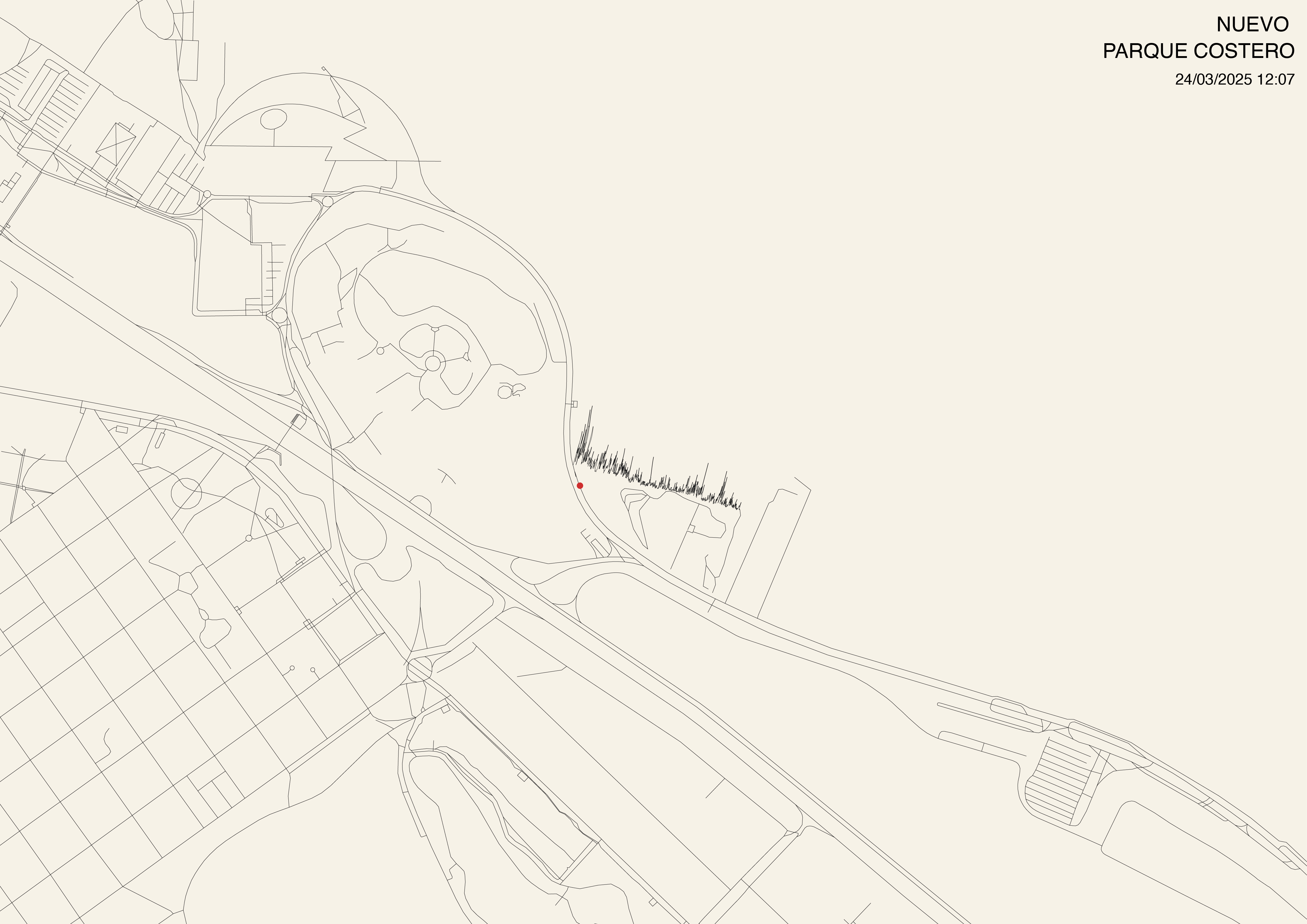
Sound field: Nuevo Parque Costero
Date: Monday 24/03/2025 12:07
Sample time: 12:07
Location: -34.546842, -58.430705
Keynote: wind, a constant background of moving water.
Sound signals: waves striking a newly built stepped waterfront; a sharp dripping when a wave is big enough to splash; water retreating after crashing against the waterfront.
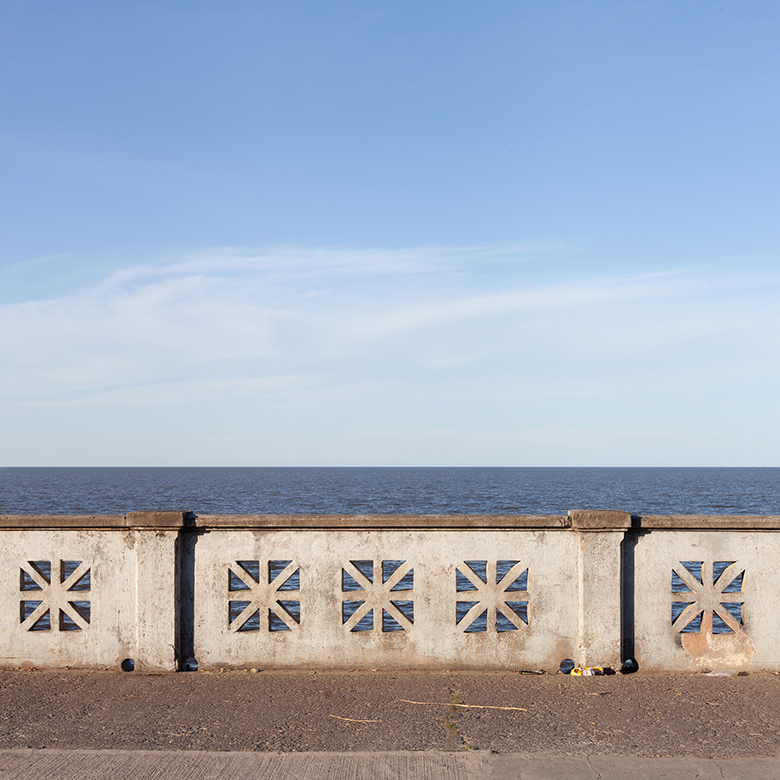
Soundmark: The incessant movement of the water on a windy day generates an atmosphere prone to the contemplation of the horizon. The city seems to disappear behind us, but each surge of the waves reminds us that we are in a concrete landscape built by urbanization, so new that it is not yet part of the city’s cartography.
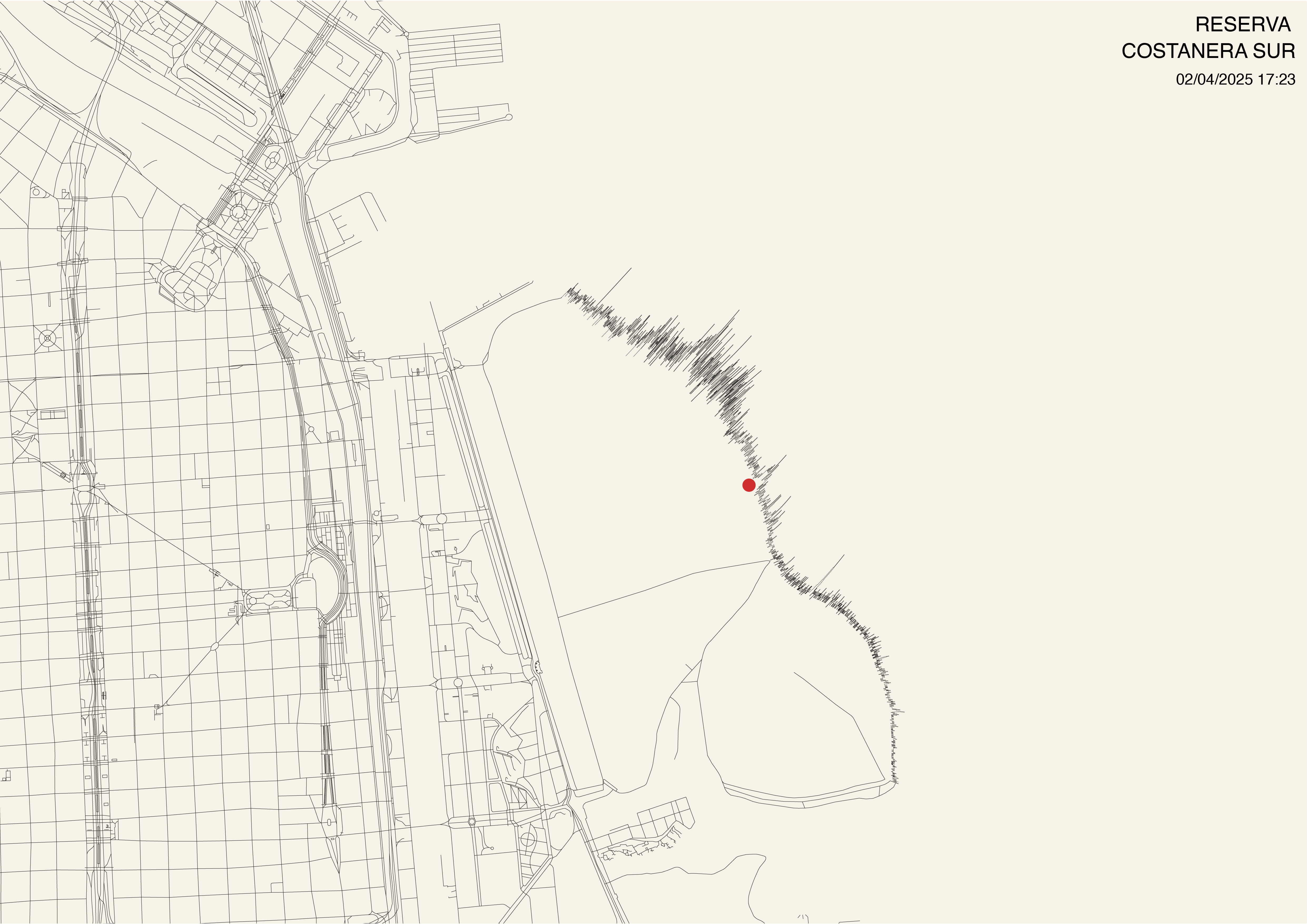
Sound field: Ecological Reserve
Date: 02/04/2025
Sample time: 17:23
Location: -34.602438, -58.347064
Keynote: wind, the engine of an airplane, water clattering against fill rubble.
Sound signals: a shout, footsteps on stones.
Soundmark: The shape and materiality of the pipes and the sudden shout evoke echoes that would be unrepeatable were it not for those abandoned structures. The pipes create reverberation chambers that amplify the sounds. Thirty seconds of an airplane landing, with an average of 300 daily flights at Aeroparque, amounts to two hours and thirty minutes of noise per day.
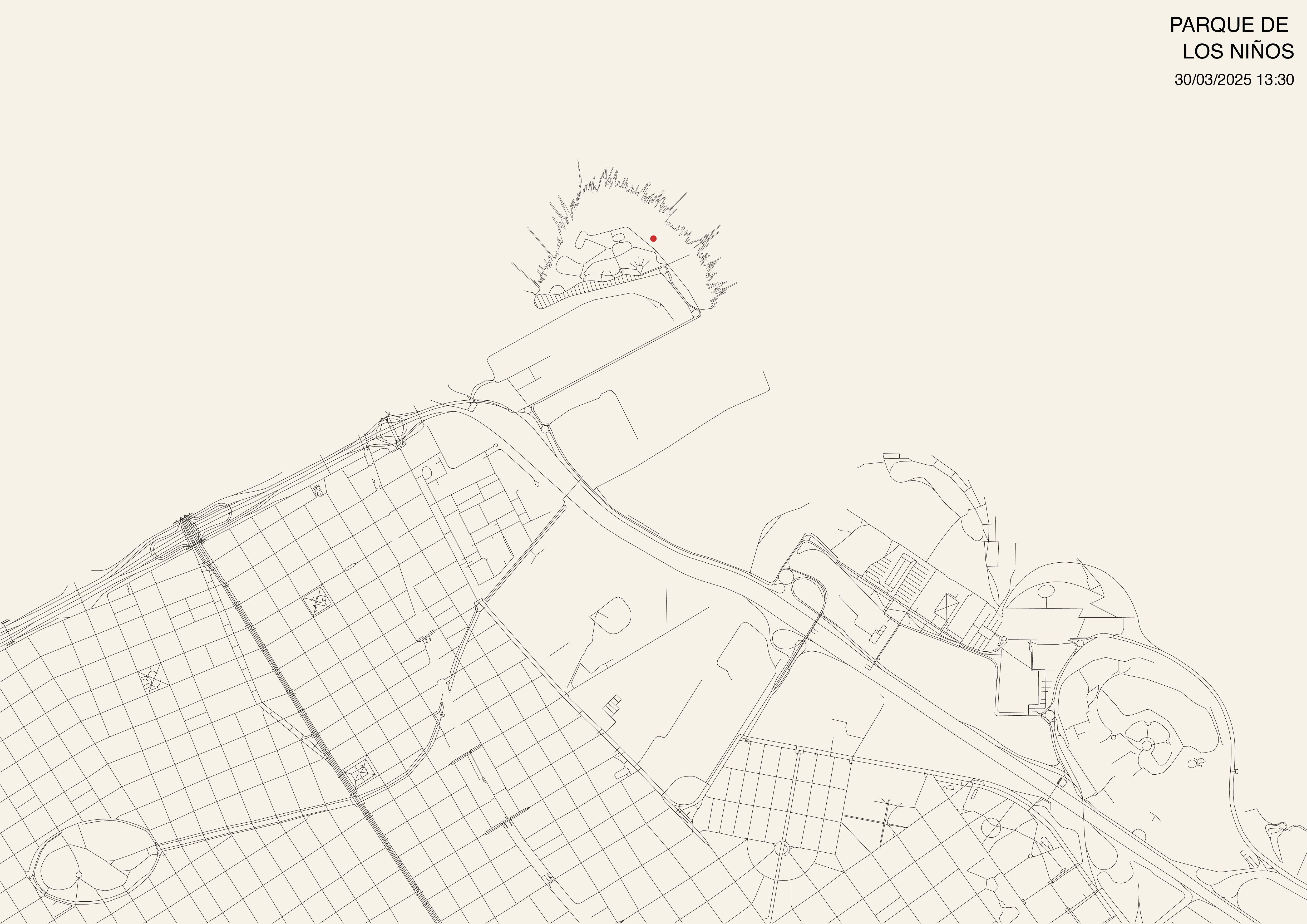
Sound field: Parque de los Niños
Date: 30/03/2025
Sample time: 13:30
Location: -34.527969, -58.455738
Keynote: wind passing through casuarinas, gentle waves, distant voices.
Sound signals: parakeets, southern lapwings, a whistle, two fishermen leaving.
Soundmark: The sound of the wind passing through the casuarinas evokes the sounds of the sea, a reminder that the river is only passing on its way to the sea. The wind is an element that seizes the ears by force. The sensation is as auditory as it is tactile.
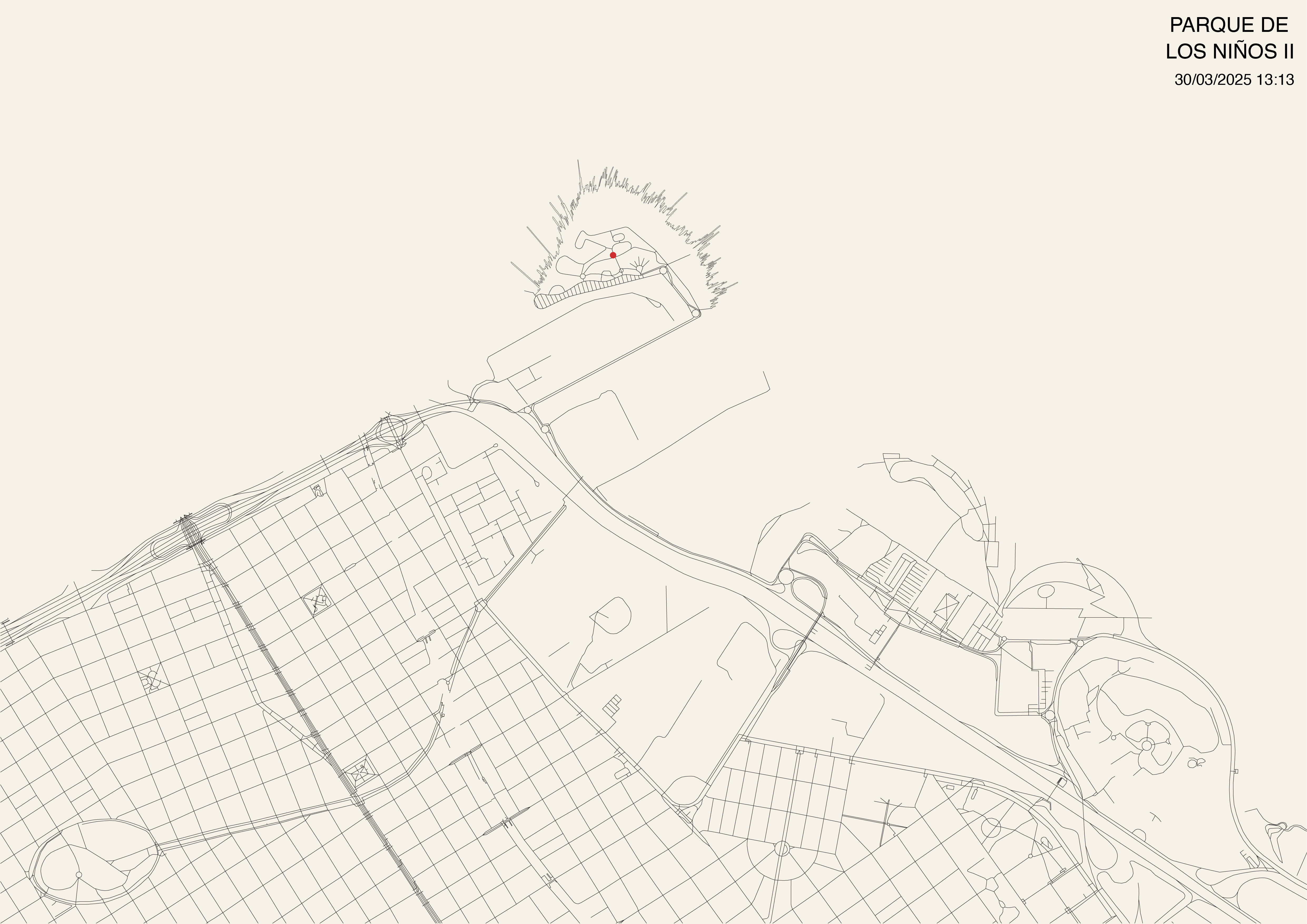
Sound field: Parque de los Niños
Date: 30/03/2025
Sample time: 13:13
Location: -34.529051, -58.457328
NOTE: Piece made solely with the recorded audio.
Keynote: wind, distant voices.
Sound signals: the creak of a swing, distant gunshots, parakeets, southern lapwings, a child, a whistle, two fishermen leaving, an engine speeding past, a child playing.
Soundmark: A play space interrupted by incessant gunfire coming from the federal shooting range; more than the children’s park, we might call it the park of gunshots.
Sound field: Parque de los Niños
Date: 02/04/2025
Sample time: 16:53
Location: 34°36’18.0″S 58°20’46.0″W
Video:
Date: 29/05/2025
Sample time: 17:27
Location: entrance to the port of Colonia Express via the south dock
NOTE: Piece made with the audio recorded at the ecological reserve, overlaid onto a video taken aboard the Colonia Express boat.
Urban life tends to generate low-fidelity landscapes, in which the audible horizon is barely discernible and the sum of sounds is overloaded, confusing the act of listening. In the research project Aguas abajo, artists and academics from the Field Recording and Sound Map Workshop (TGCMS) set out to record the beds of the piped streams, invisible were it not for the recently added signage indicating “such-and-such stream passes here.” “It is a strange challenge, this mapping of the sound of the absent. More than the absent, of what is imperceptible to urban life: what is the sound of a river that does not sound like a river?”
The bond between the city and the water has historically been complex. Buenos Aires has not only turned its back on the river; it has also piped it and, in many senses, silenced it. The coast is a territory in constant movement, whether through the urban policies that reclaim land from the water or through the natural sediments deposited by the current. It is a living edge that defies the static, abstract image of the urbanized limit. The construction of the river’s soundscape in the city is closely tied to the policies of urbanization or recovery of our riverbank. Thus, in the city’s most important nature reserve, the native sounds are silenced by the passage of 300 airplanes a day. Sonic awareness is the ability to consciously focus attention on ambient sound, requiring a continuous state of alertness and an invitation toward always listening. To listen is to be open to space.
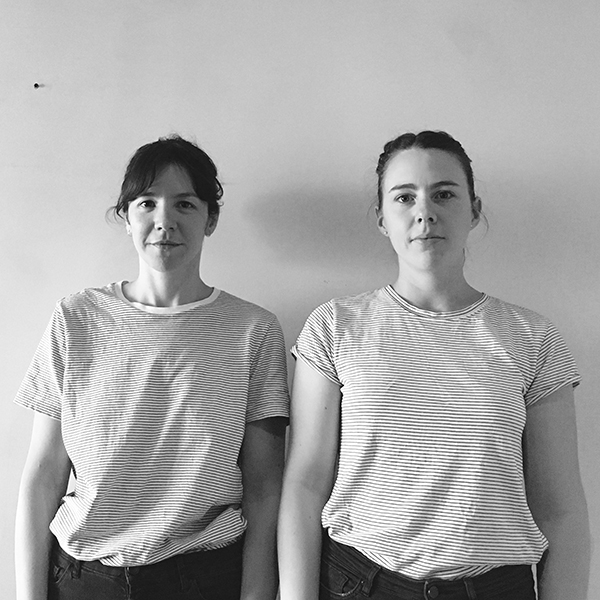
Caza Estudio fue fundado en 2015 por María Zamtlejfer y Nina Carrara en la ciudad de Buenos Aires. Se especializa en arquitectura residencial, reformas integrales, interiorismo y diseño de mobiliario. Además de la arquitectura, comparten un interés por la creación musical. Tanto la música como la arquitectura nacen de un proceso introspectivo, ambas requieren trabajo y una mirada estética y personal; dos modos complementarios de habitar, contemplar y transformar.
Esta investigación fue desarrollada por Nina Carrara, la construcción d paisajes sonoros mediante el uso de sintetizadores y arpegios de piano, donde las melodías envolventes y la atmósfera se funden, dando lugar a nuevos espacios auditivos.
Los mapeos que acompañan las imágenes, fueron realizados en colaboración con el Estudio Normal, por María Jose Venturino.