Like a decoupage, thought settled onto the fragments of brick, mortar, and bent iron, and the myriad of elements became substrate: a hydroponic support for the organic mantle in which the plants took root. Thought and substrate are one and the same.¹
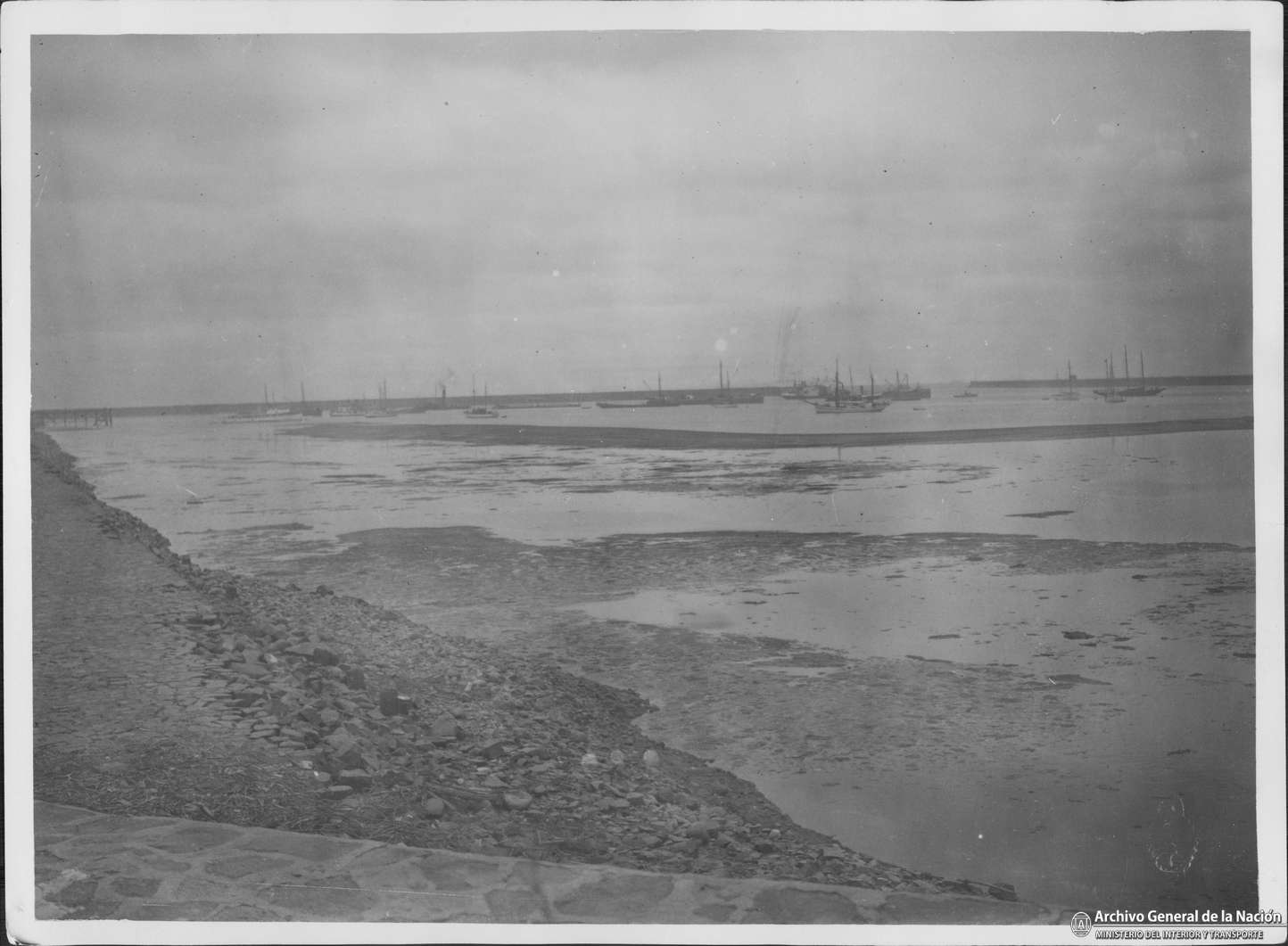
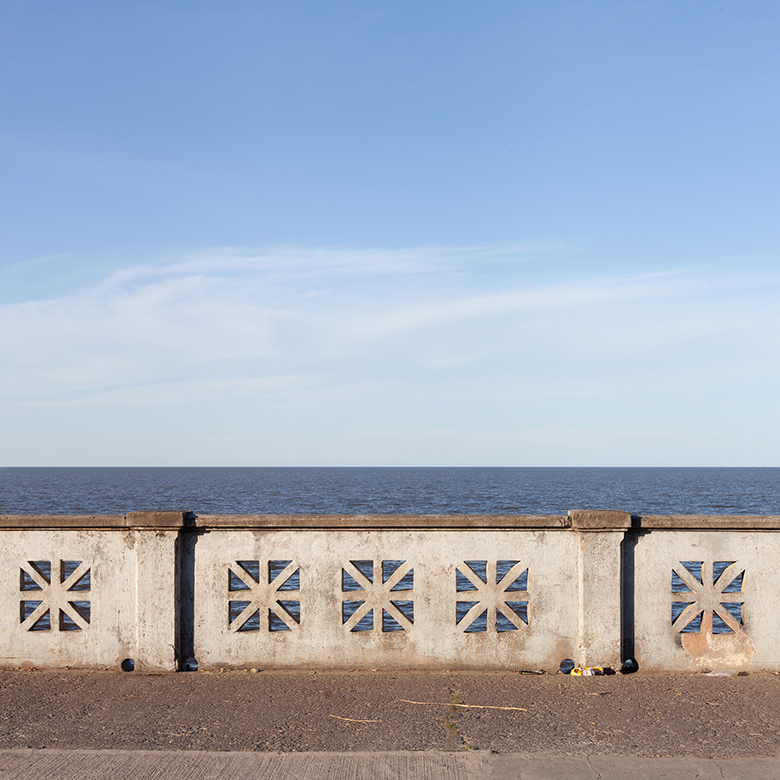
The Río de la Plata is a small sea with a muddy bottom, an old port, and an improper landscape. It is a primal Eden painted in oils, grainy black-and-white photographs, and a mirror of water for the ever-hardened edge of the city of Buenos Aires.²
Just as, inland, desert had to be made in order to conquer abundance, this estuary is required to be a river. The trouble is that “estuary” is too transitional, too unstable, too unnarratable a condition for a city that sees itself as the head of a nation still in the making.
The failed, abandoned, or insufficient attempts to work its coast cannot be read without taking into account the insistently patriarchal gesture of rectifying, hardening, and permanently expanding its edge.
“To turn one’s back on the river” is a poetic expression, both for the back and for the river. It reveals the bewilderment of European thought before South American reality.
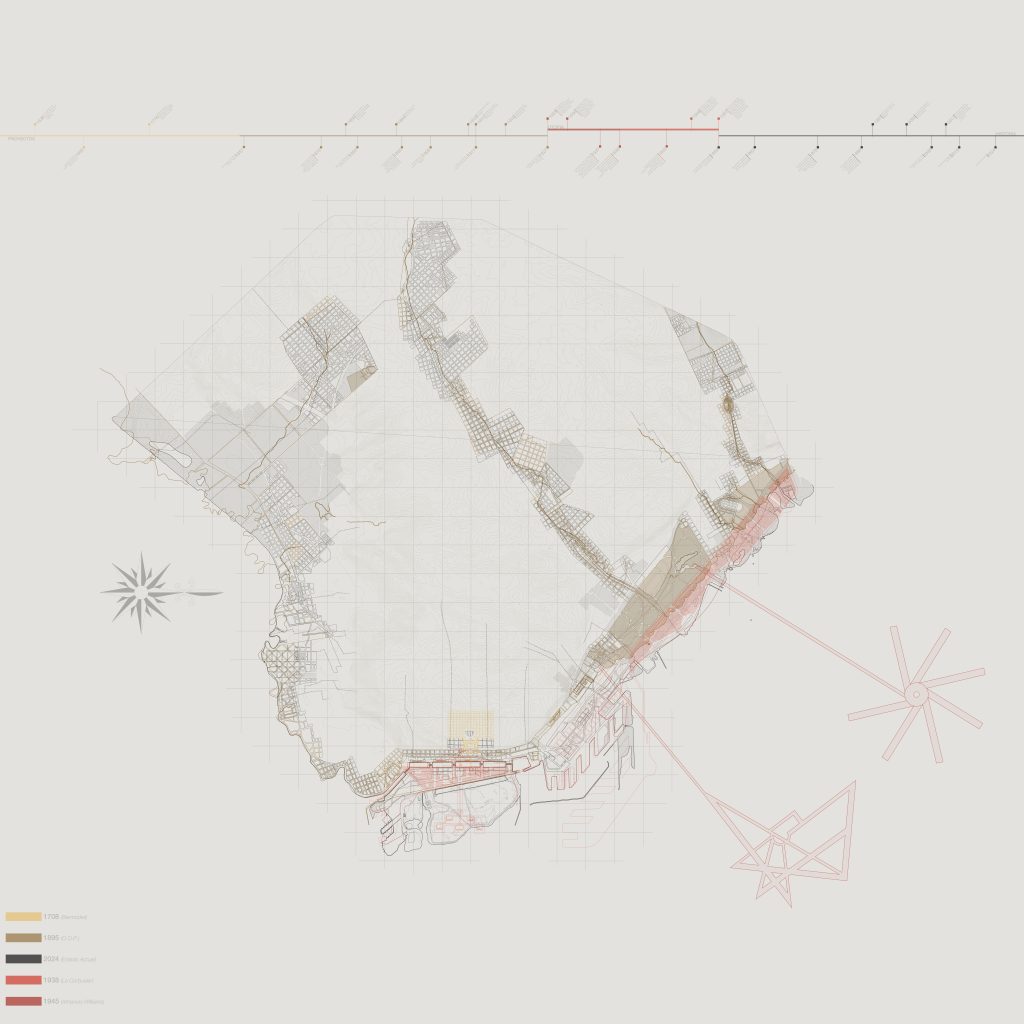
The intensity with which the coast is asserted and its change in level is operated upon is directly proportional to the vigor with which the watercourses that fill the marshes of this liminal land —between the Paraná basin and the Marginal Forest— are erased.
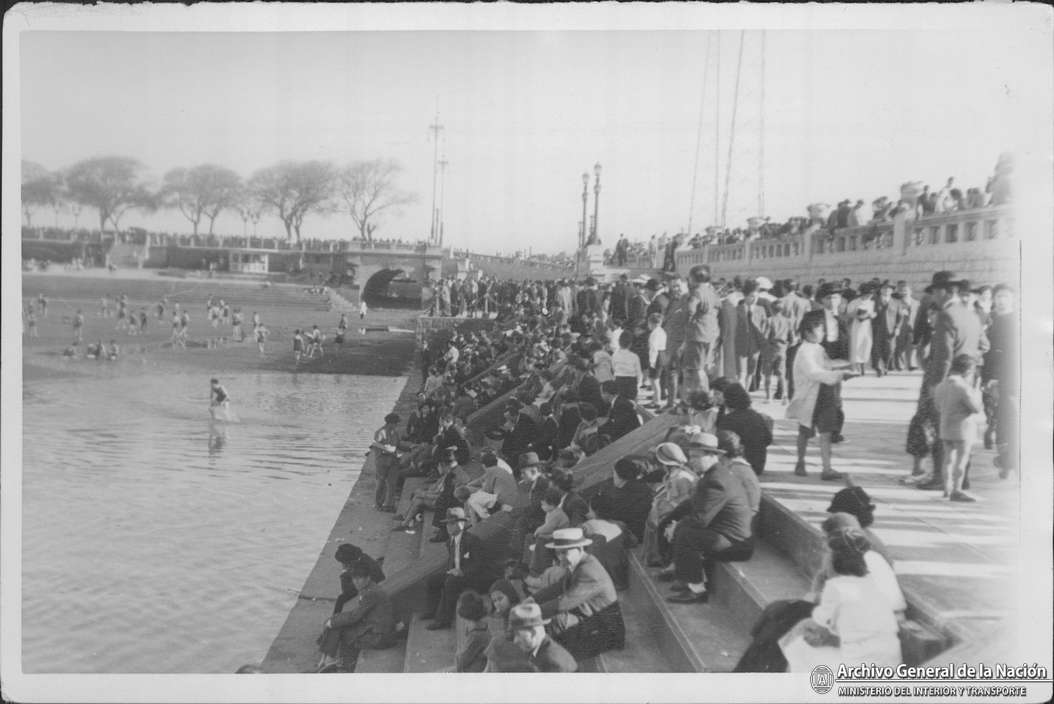
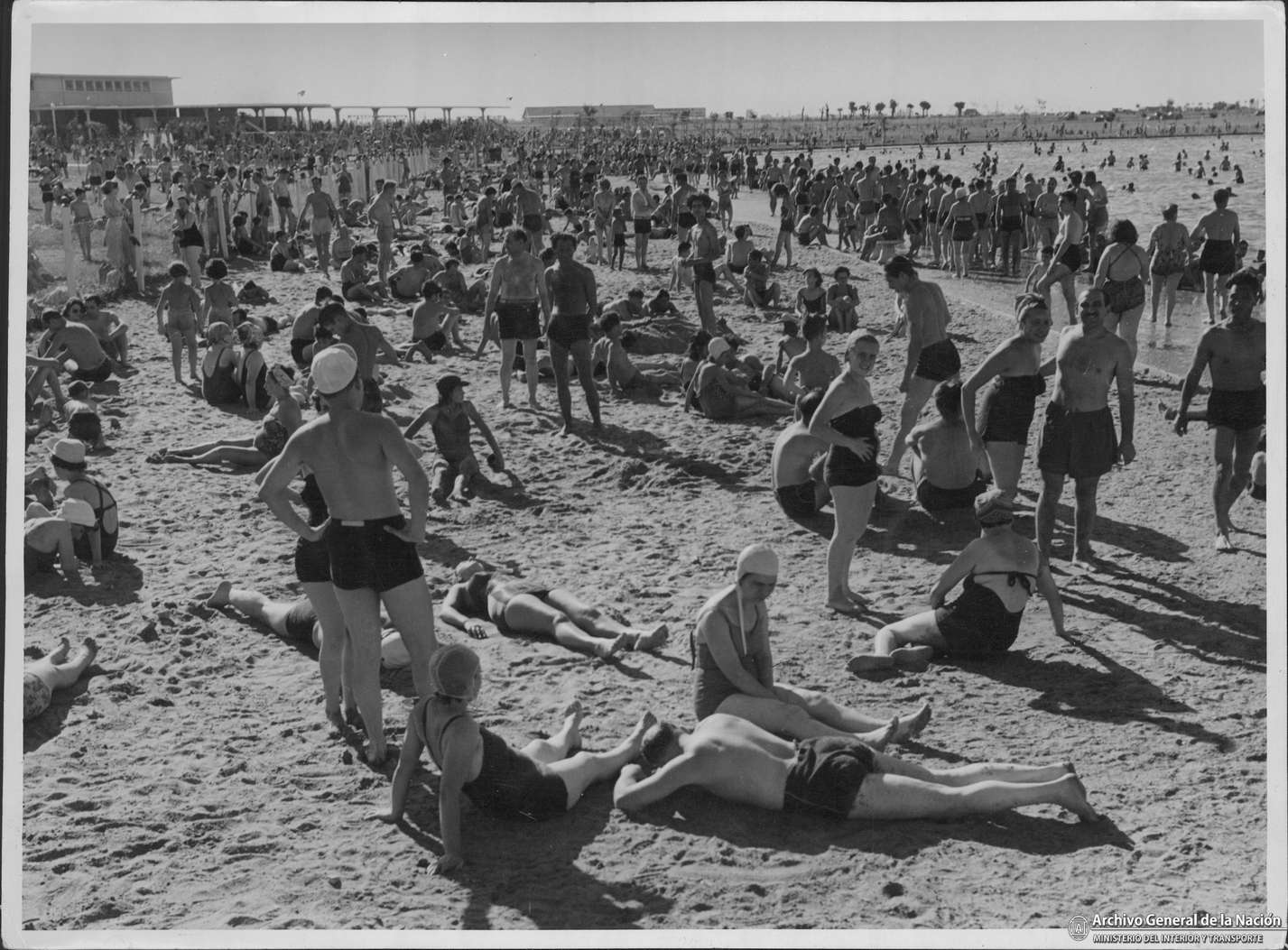
The non/river is a memory of a beach and the imagining of a seaside town, that body of water which once offered recreation and today is merely decorative. It is also the most frustrated identity signifier: forever evoked, yet never acted upon.
Along the much-invoked “coastline,” out of the constantly changing change in level, the staircase device emerged, a necessary connection between surfaces of different density: water and dry land.
A byproduct of the organic will of the city, obstinate in its cycling across five centuries, a new device emerged (submerged): rubble, the substrate over which the compost of the sudestada seeps and oxygenates the native vegetation.
For, on this side and beyond Pompeya,³ flooding is a regional scale on which water bathes an entire basin⁴ to bring in the sediment called sand. The city fixes the sand. On a microscopic scale: an indispensable “aggregate” in reinforced concrete, only to dismantle it again in the next geological season.
We ask ourselves: what would the landscape of our city look like if we had recognized the role of the washerwomen as fundamental work, if we had allowed the water to drain freely, if we had preserved the marginal forest, if the relief of the land could still be made out on the horizon? How would children play in the meanders flooded by the rising waters?
The Río de la Plata is the place where the city went to be born, before the water became a river. The river is an old place, the oldest in this part of the world. It is the place where we exude our waste, and where we go to imagine ourselves as river-dwellers, as elusive coast-dwellers; it is where we are constituted as hydro-social subjectivities, despite our reluctance toward liquid contact with the brown waters of the Plata.