01
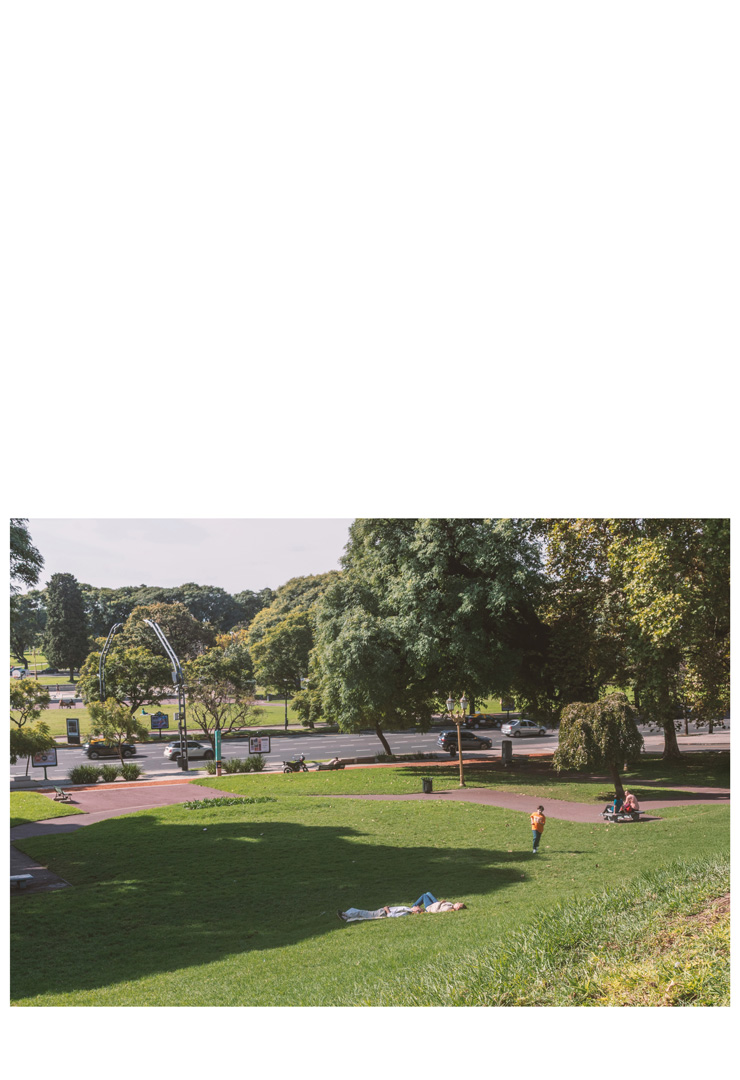



“Irene does not know what will come next, and yet it is as if she knew; even the unexpected ends up becoming habit once one has learned to endure it.” 1
Cortázar seems to be speaking of the landscape of the city of Buenos Aires and its infinite orthogonal grid, which never acknowledged the slope of the hills except in the parks —and perhaps, in that analogy, the unexpected could be the hills themselves: while for the residents of each of them they have already become habit, we have rarely stopped to think of them as a set, or as part of a single system.
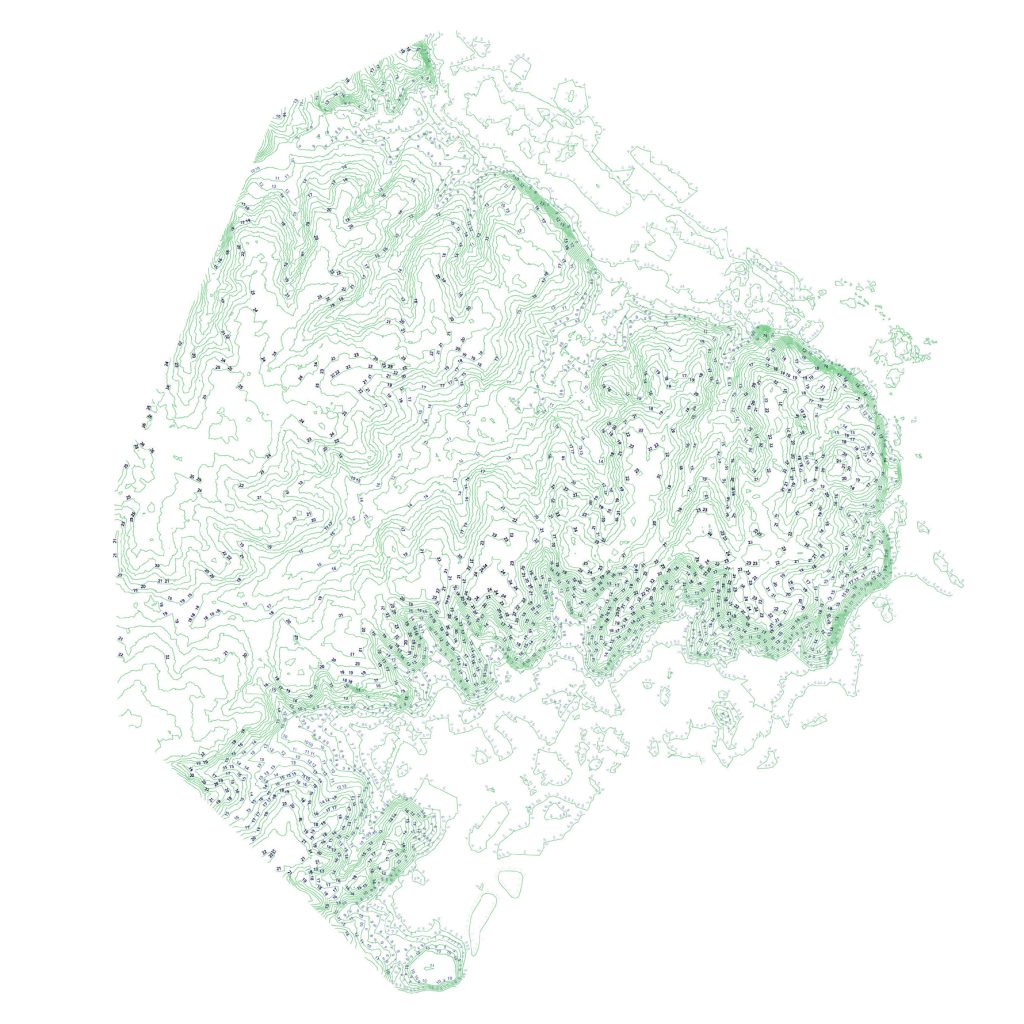
The hills, as natural geographic features that mark a change in elevation in the relief, represent one of the most visible traces of the old coastal edge of the Río de la Plata. They predate the expansion and consolidation of the contemporary urban grid.
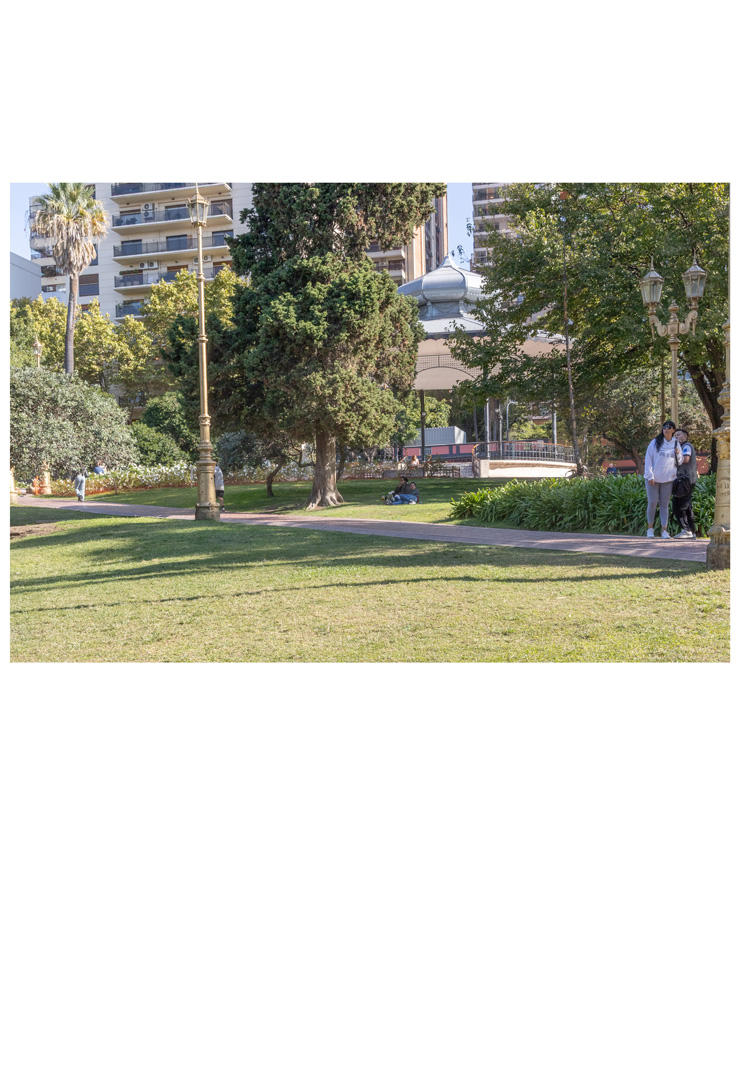
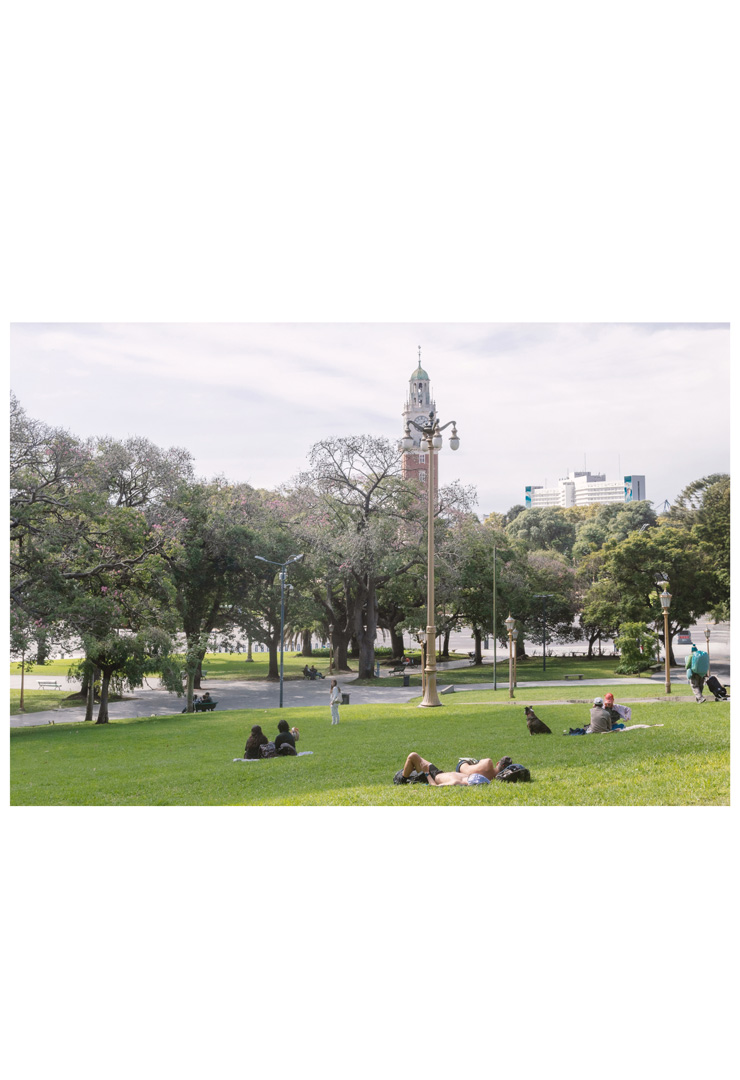
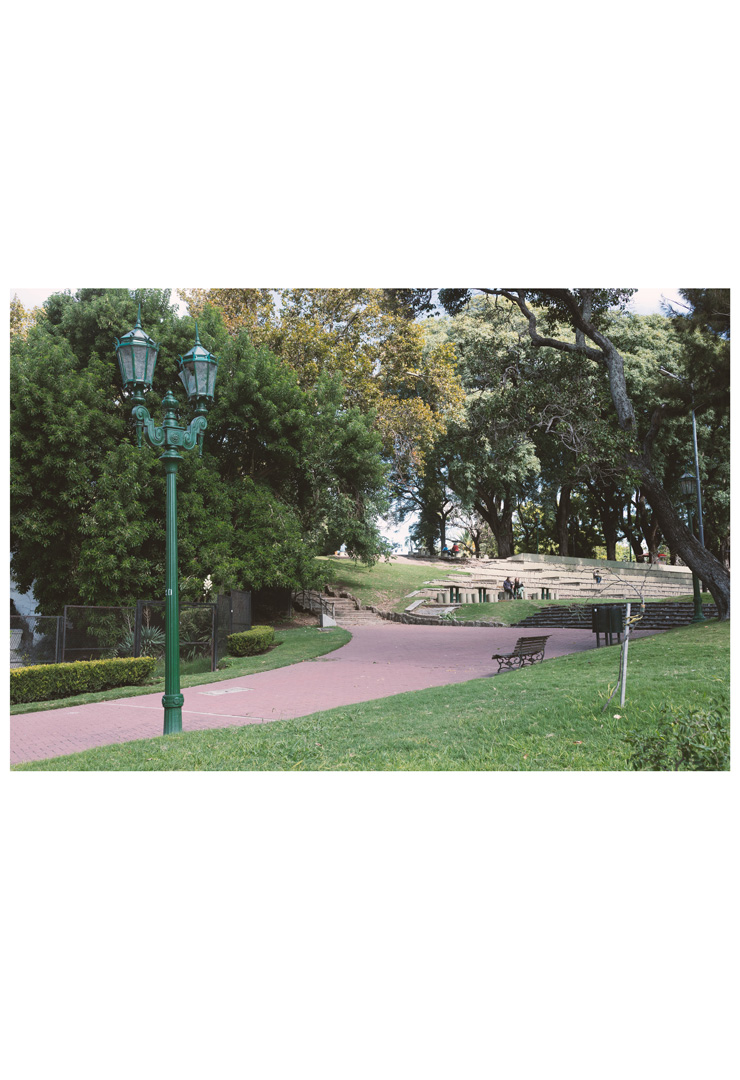
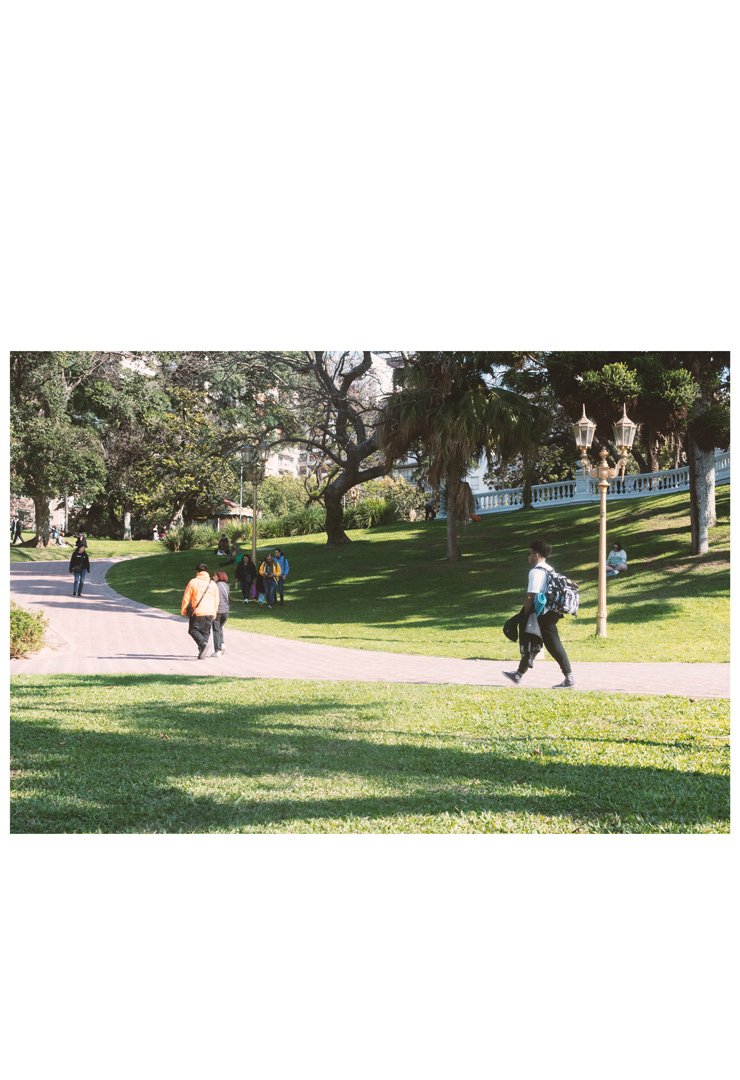
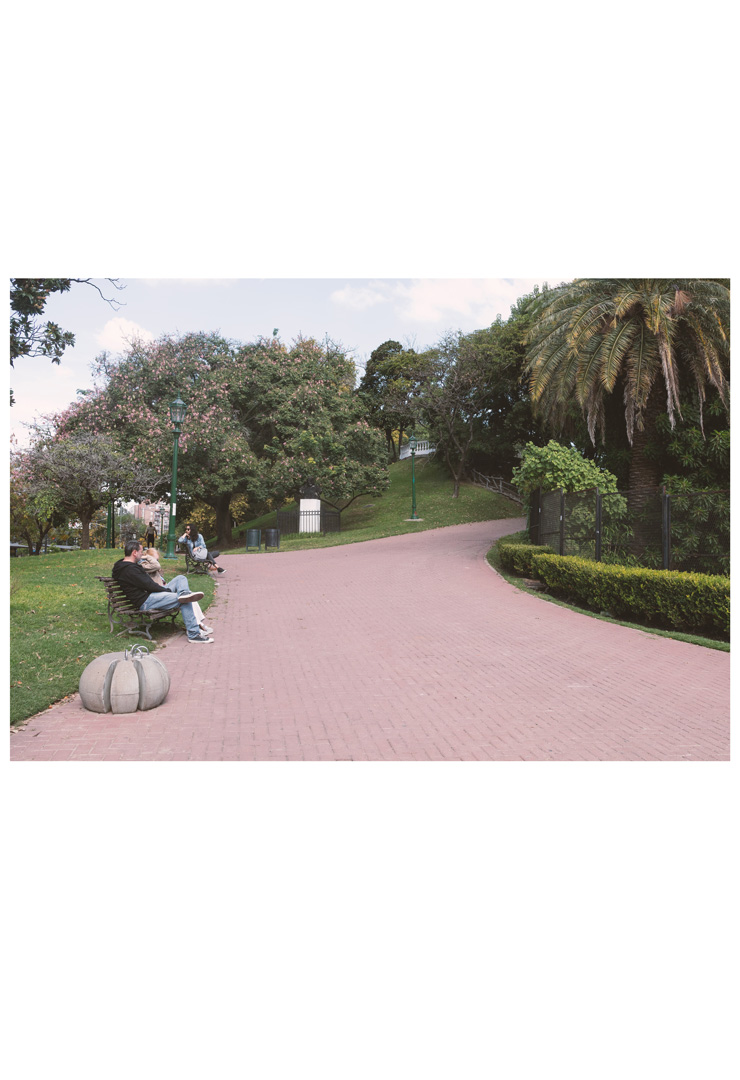
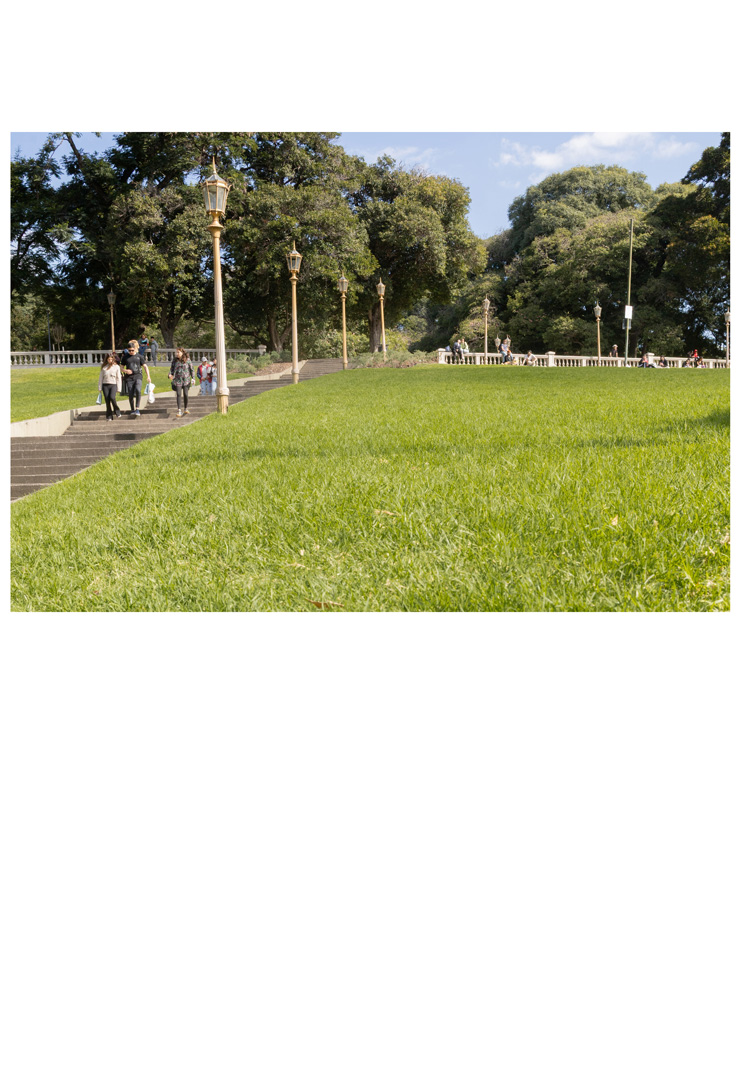
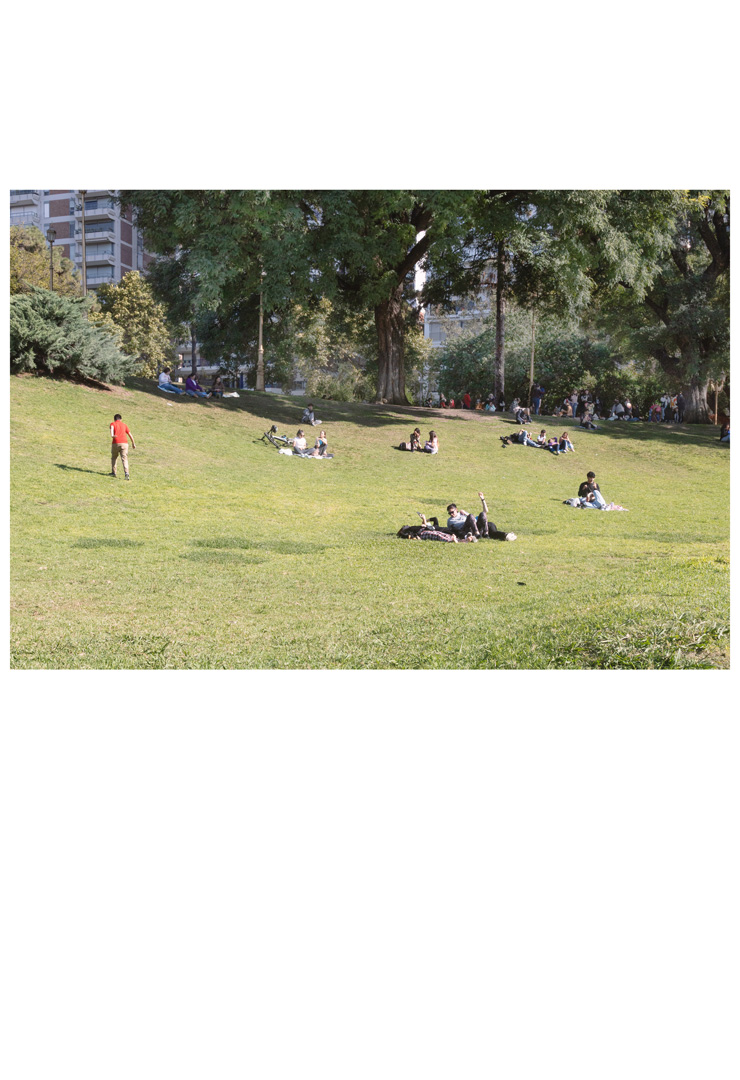
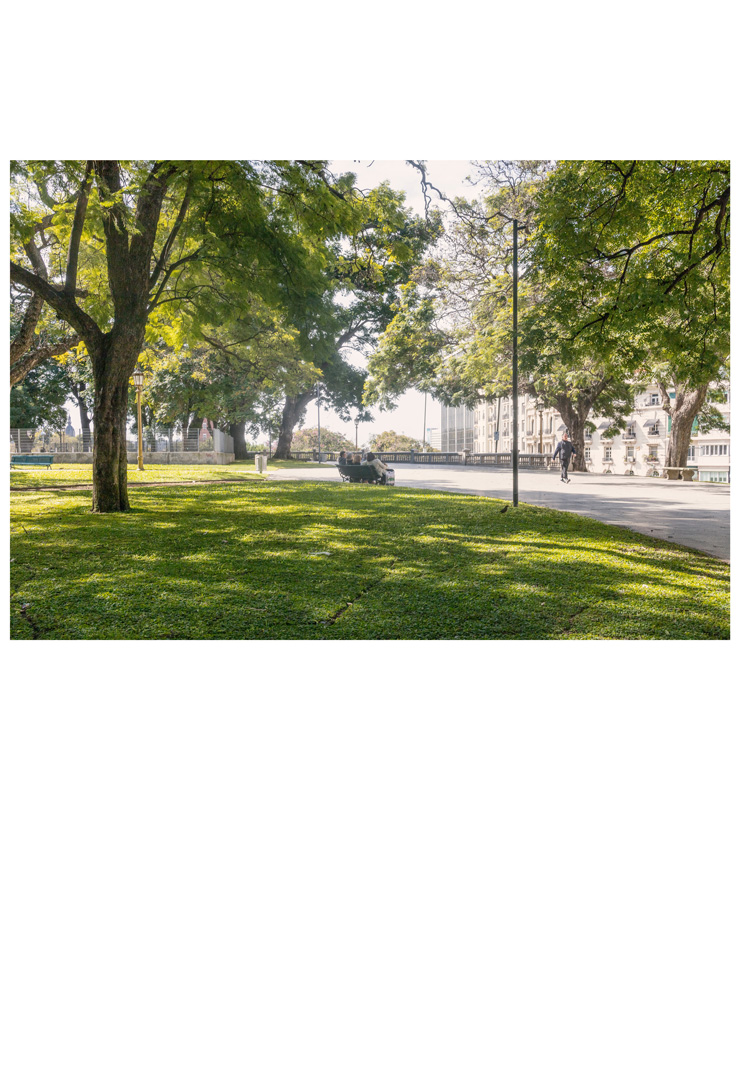
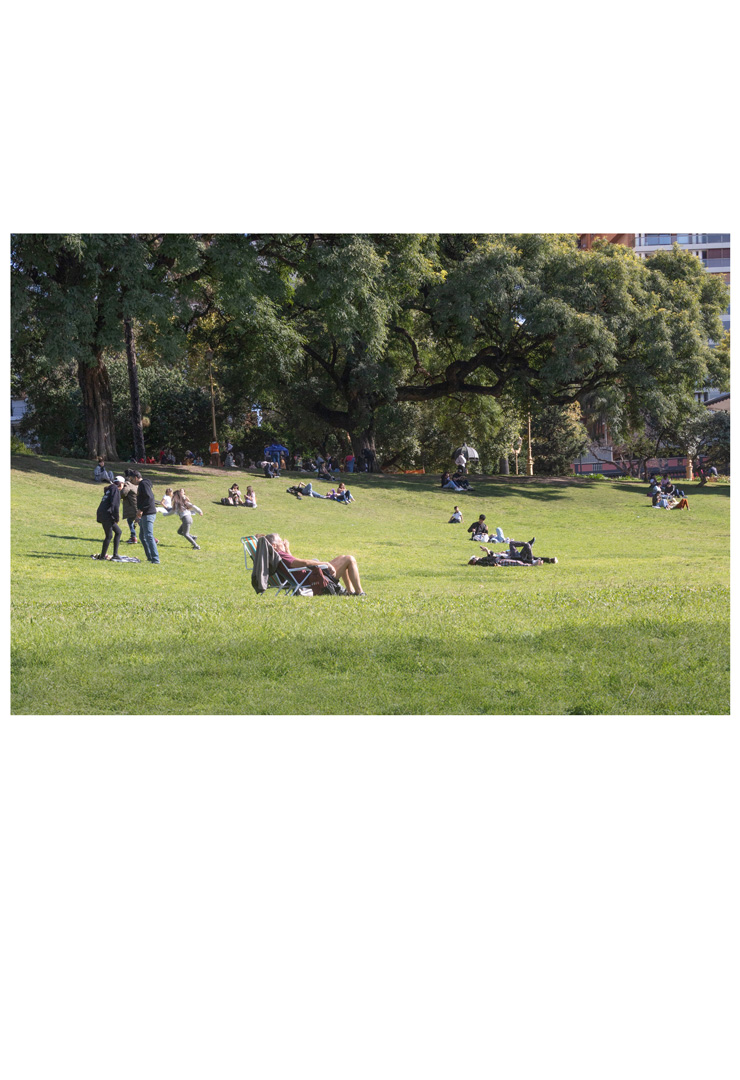
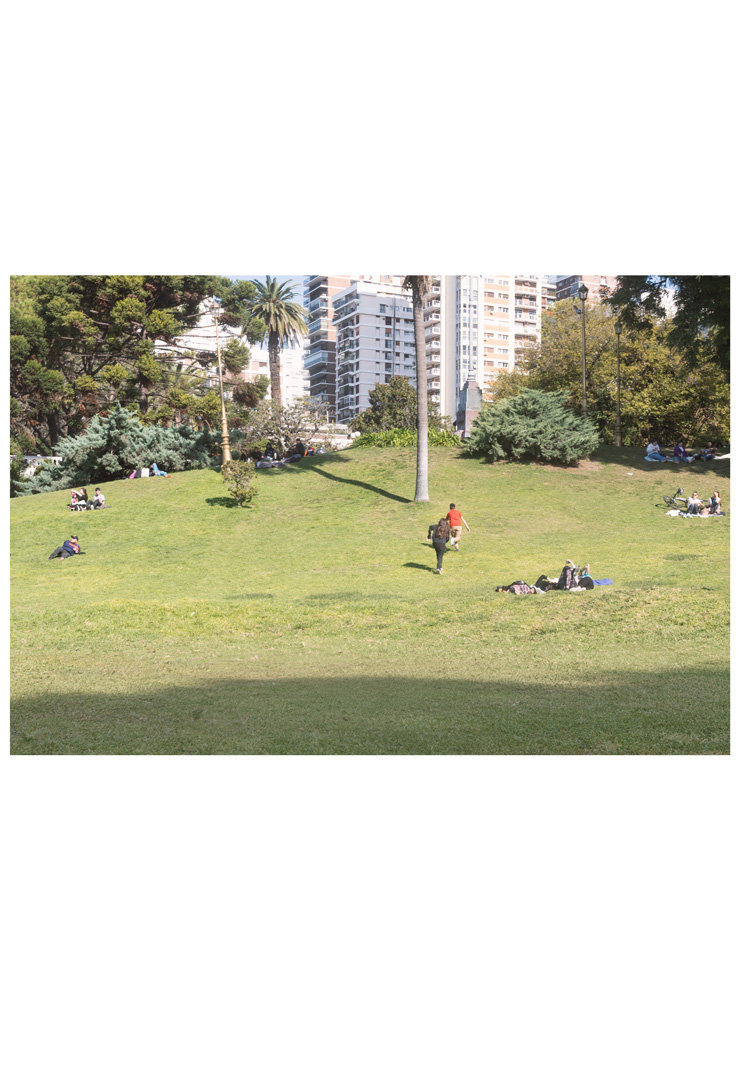
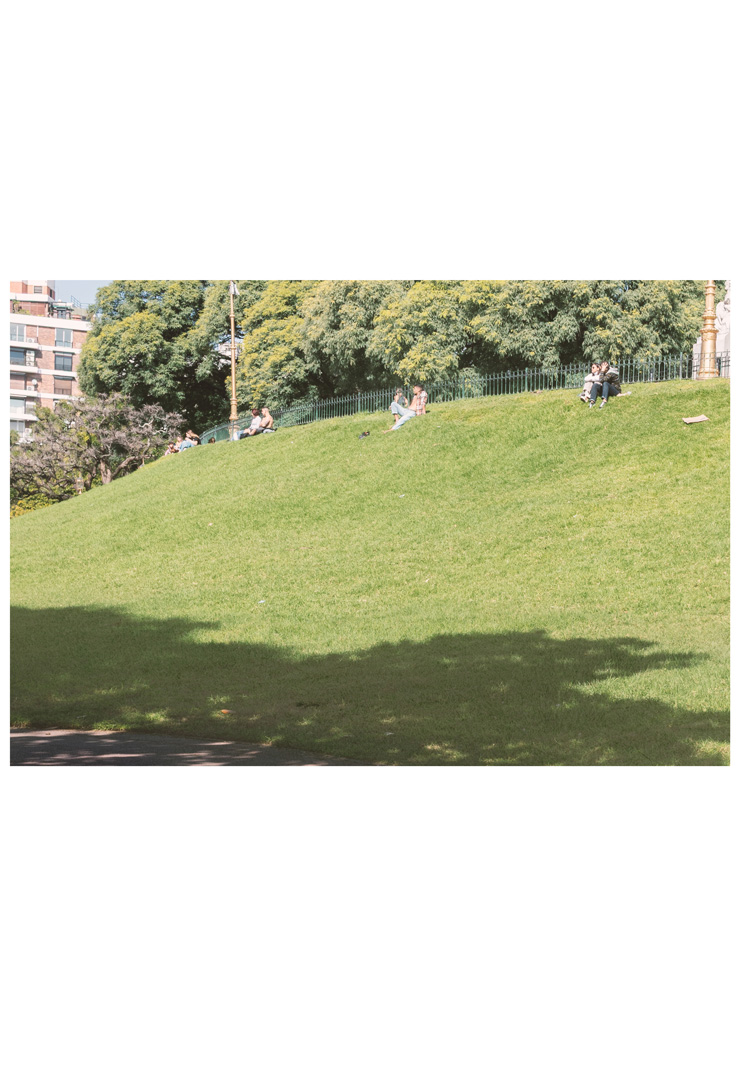
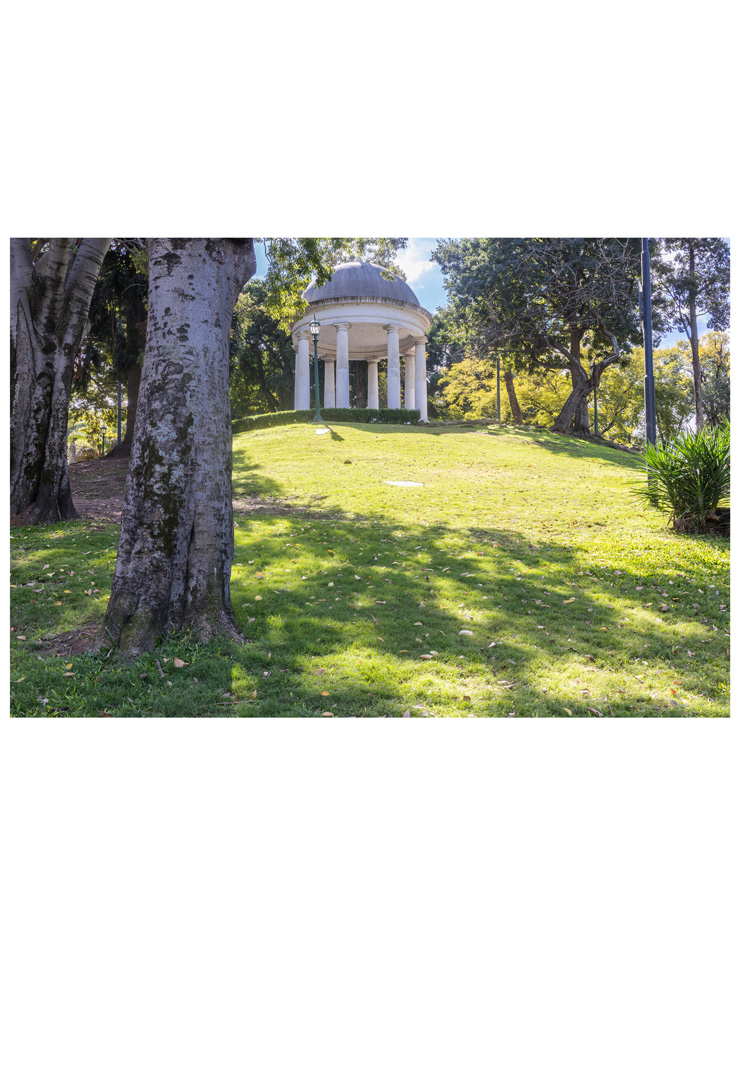
The hills form a territorial system that must be analyzed and understood as a whole. A photographic series can, in a certain sense, offer a dreamlike, conceptual record of that continuity.
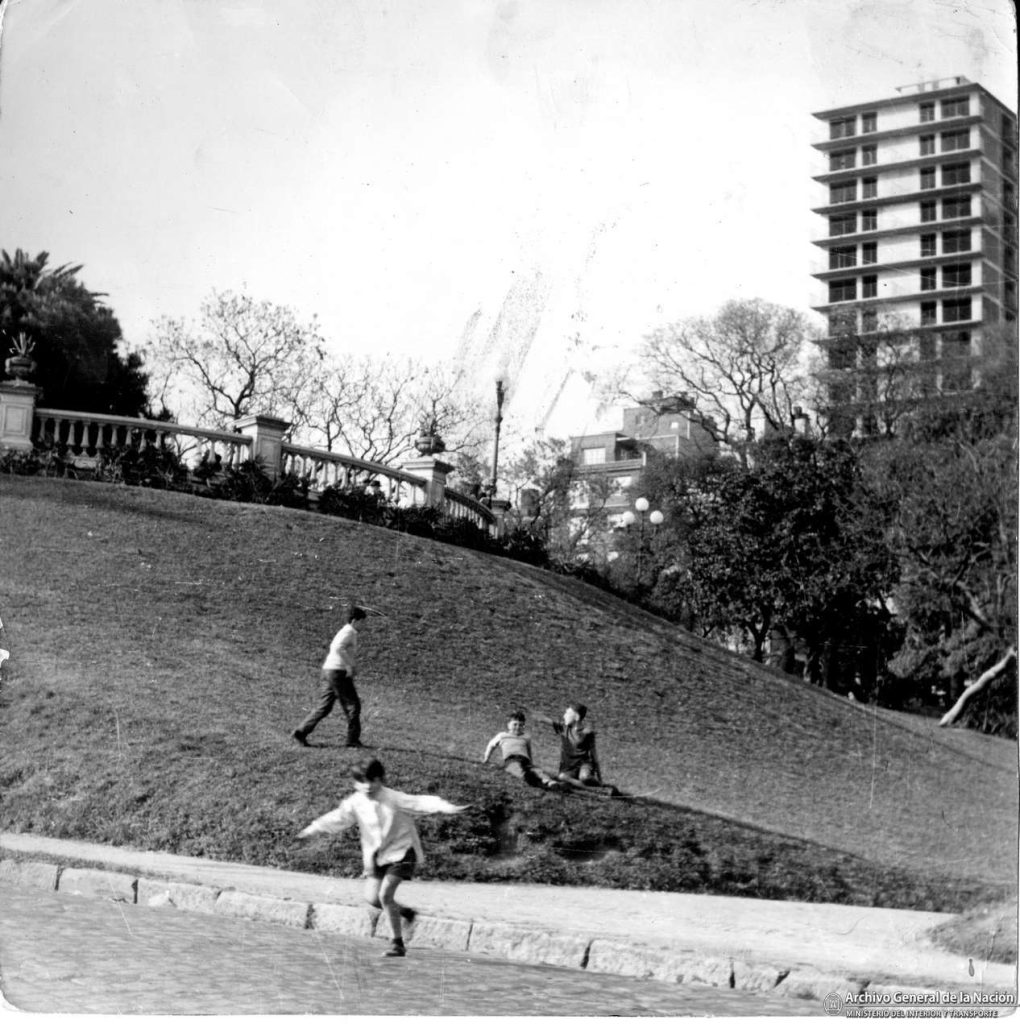
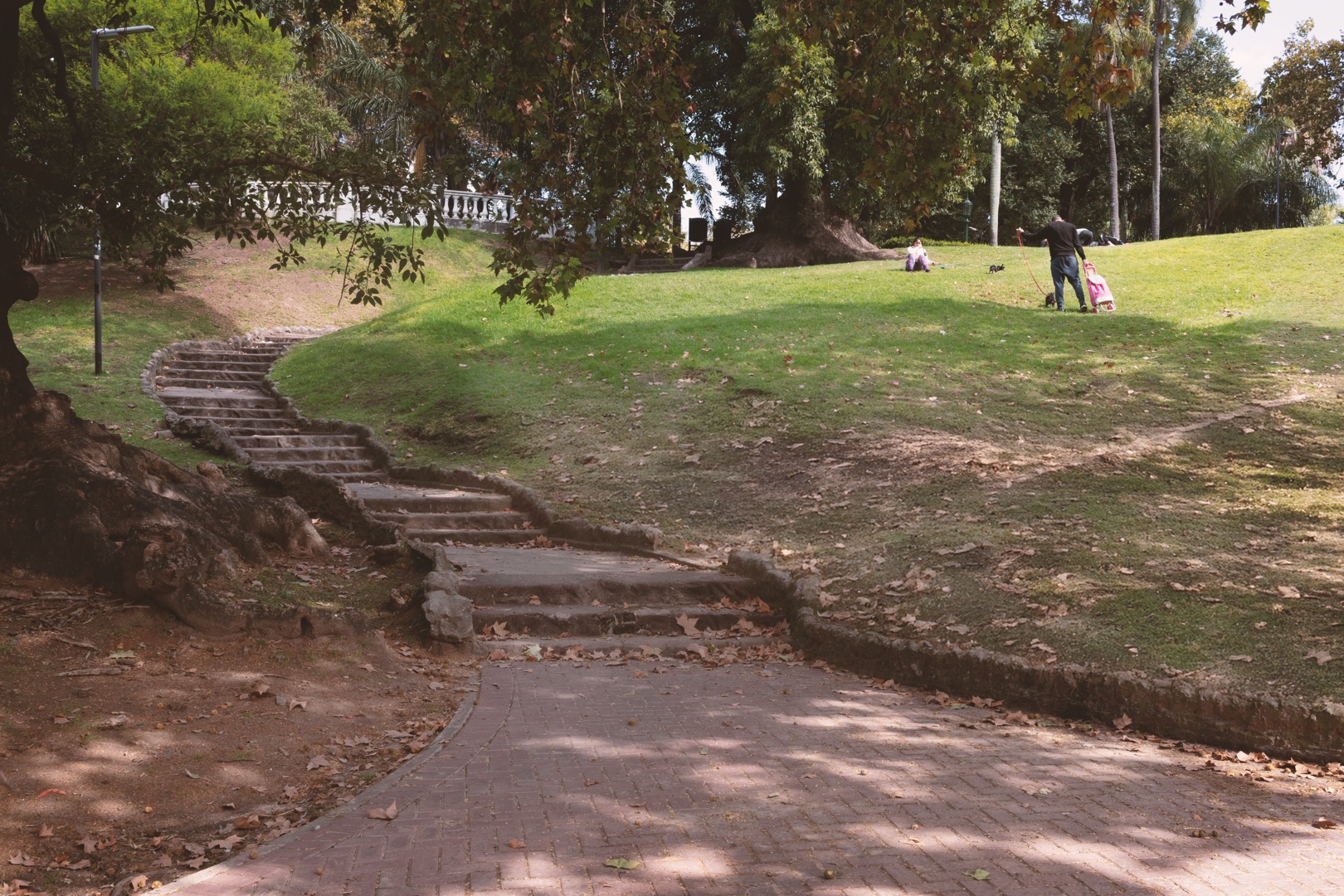
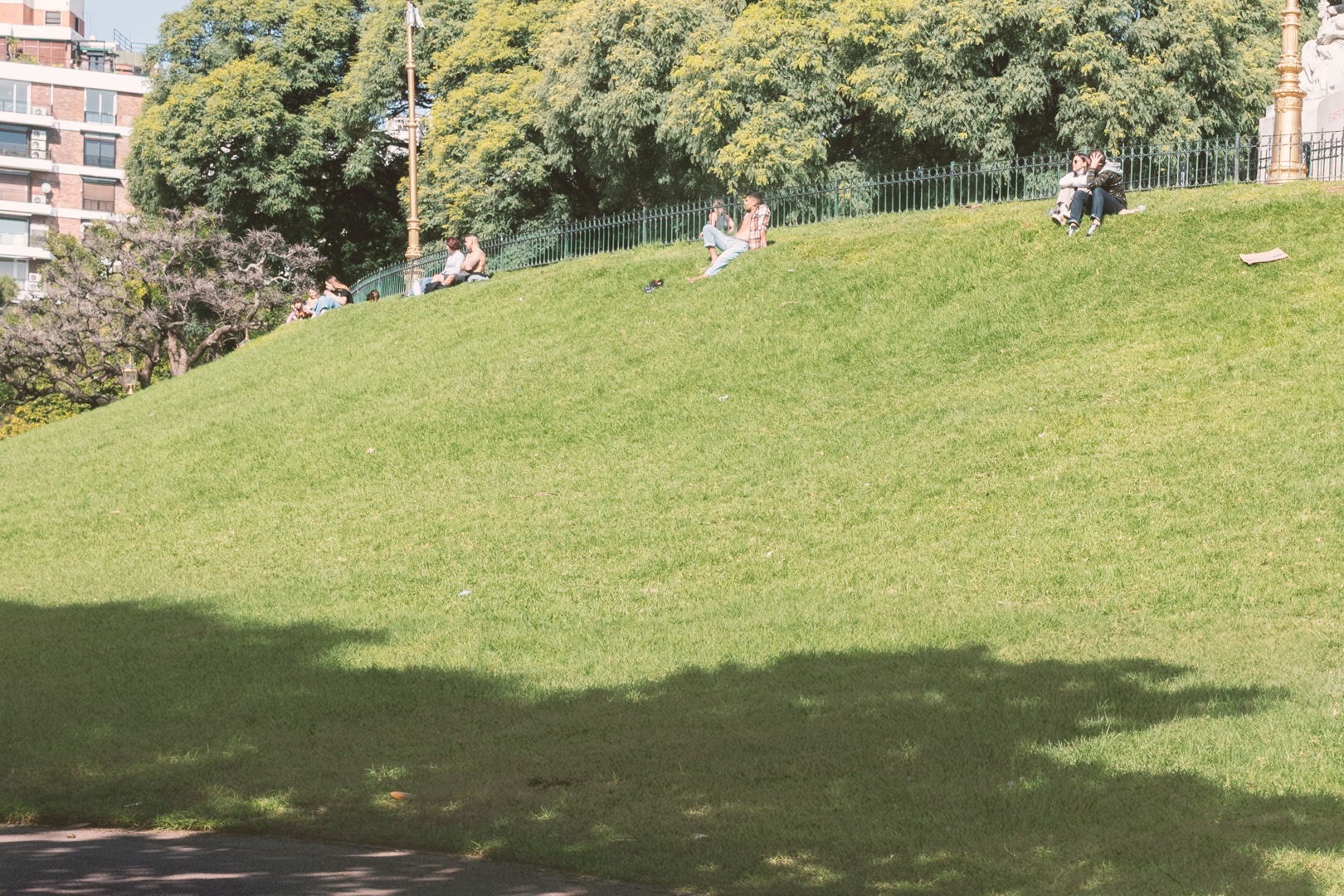
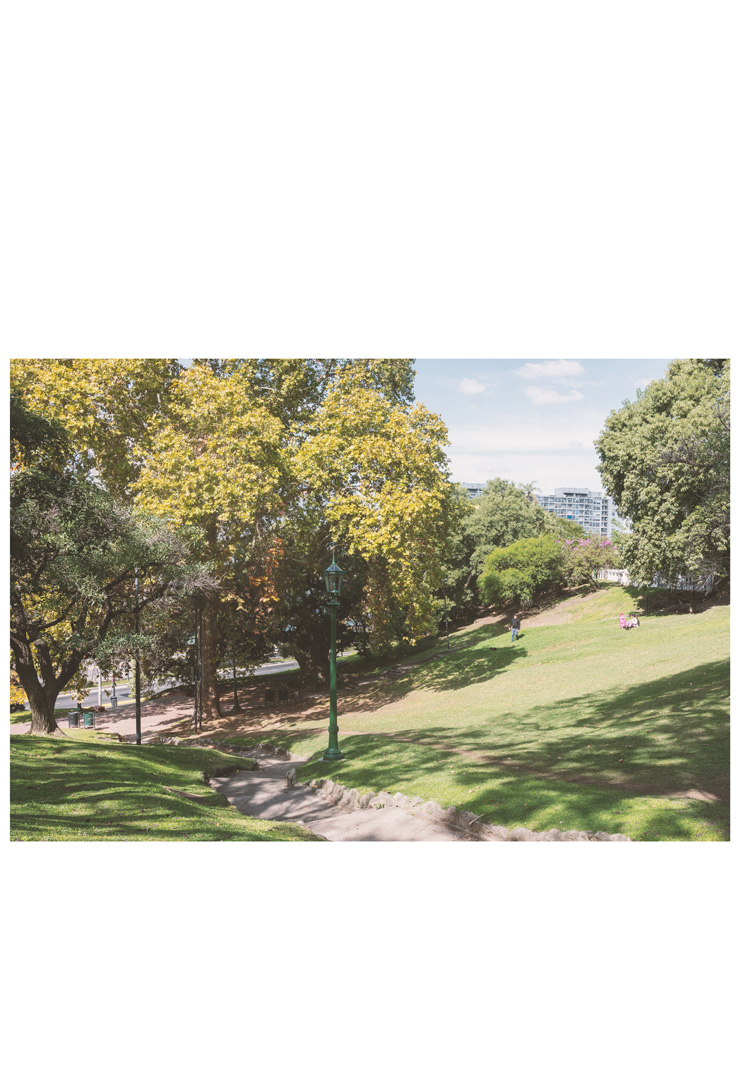
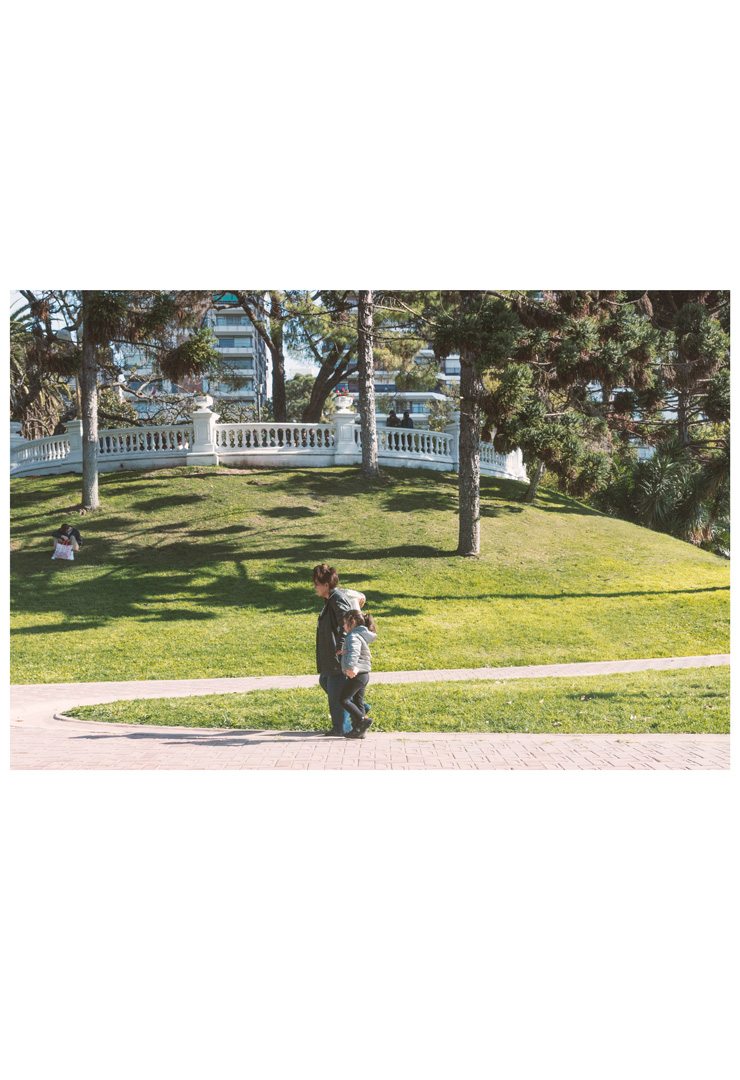
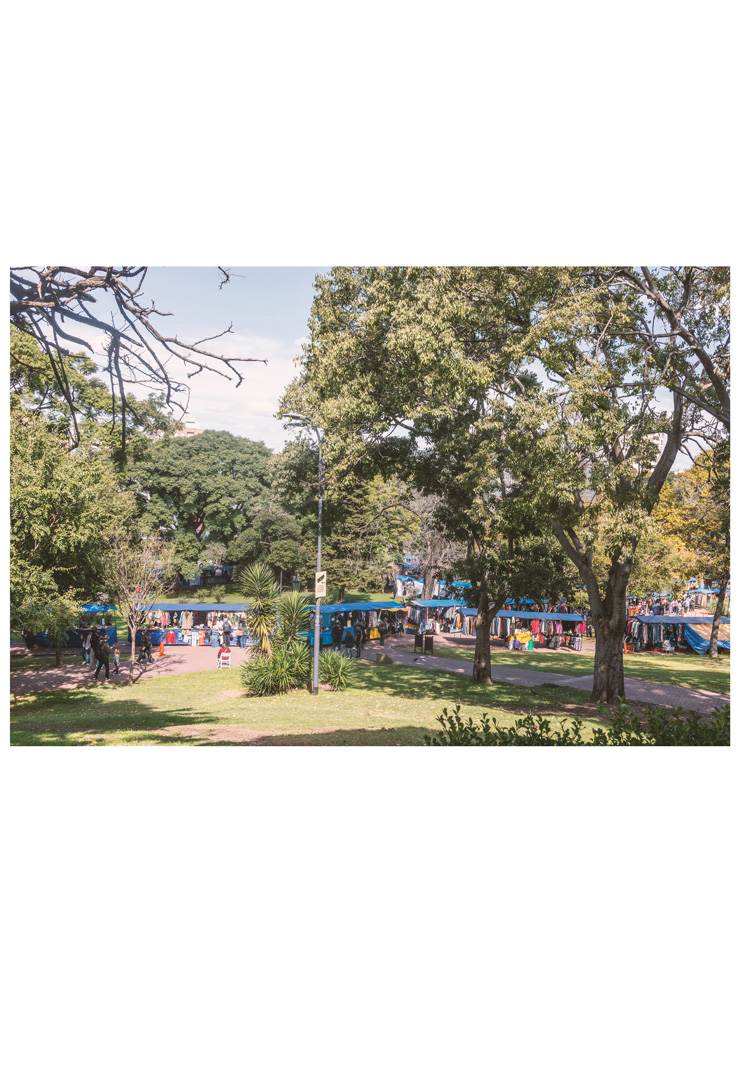
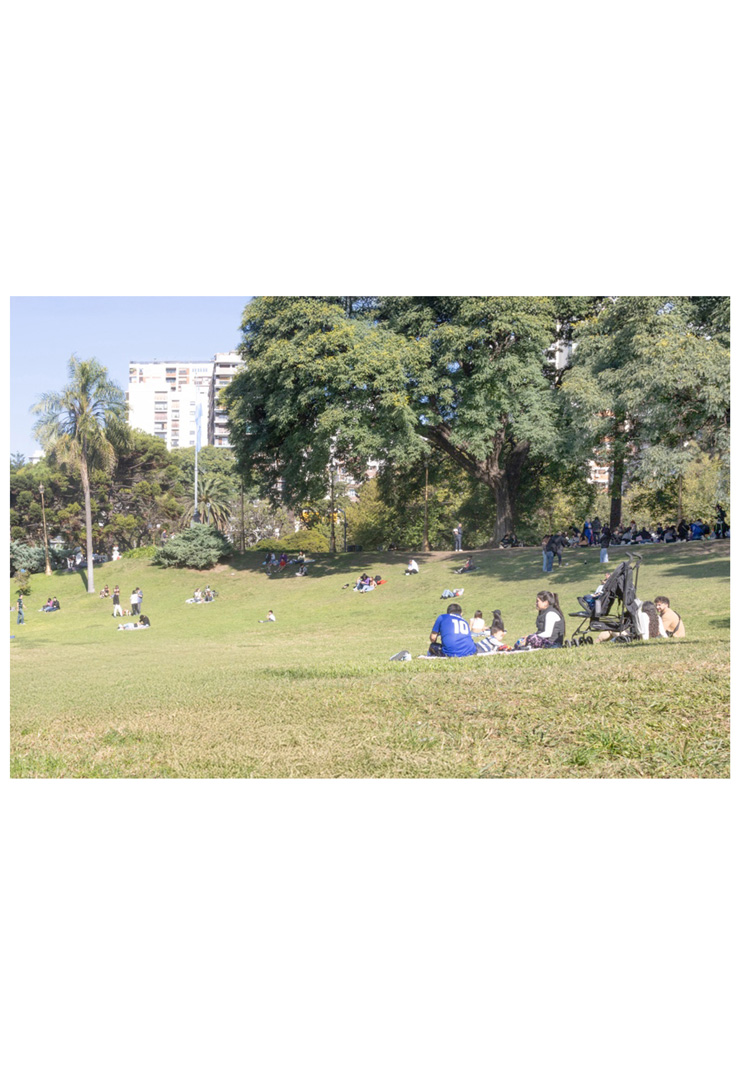
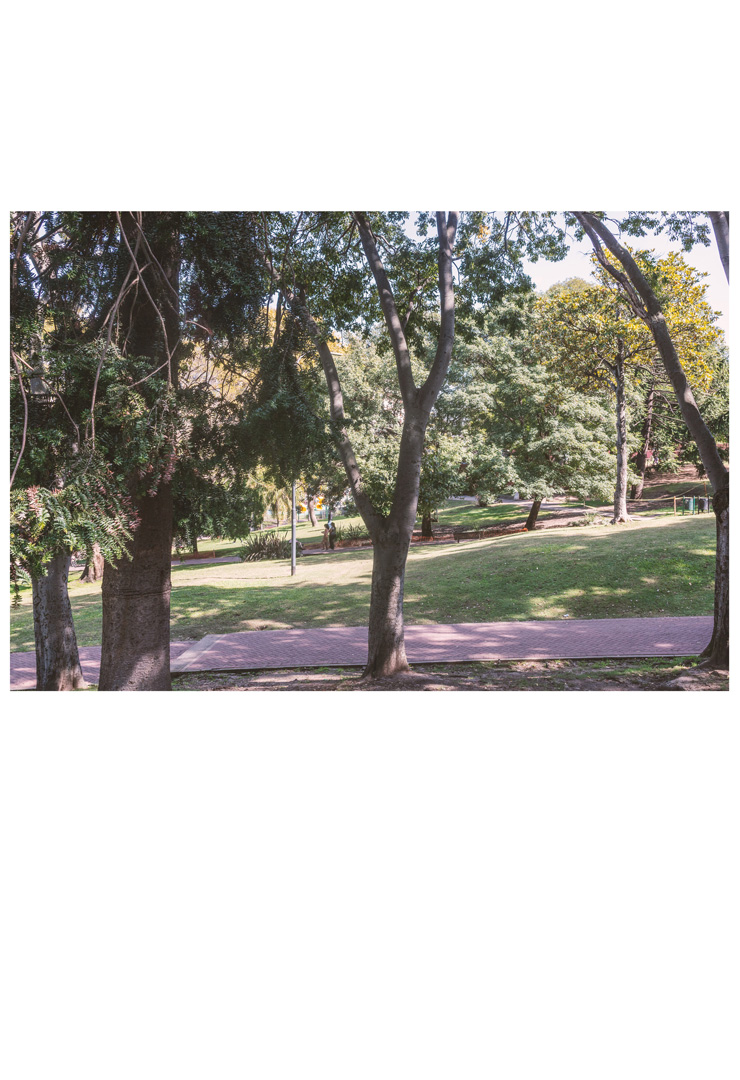
The hills that consolidate the identity of various neighborhoods are arranged seemingly at random: the Barranca de Belgrano, the one at Parque Lezama, Plaza San Martín in Retiro, those of Recoleta. Each has its own particular character in terms of slope, vegetation, land use, infrastructure, and appropriation by residents. Yet all share a common condition: that of being a buffer marking a change in elevation within a city whose fabric reads as continuous, and a symbolic border between two moments of that same city.
While there is no urban policy that unifies them, nor any heritage discourse that treats them as a group, the hills form a discontinuous yet coherent network. Bringing them together in a collage and amalgamating them makes it possible to systematize a scattered landscape while also building a collective gaze, putting into relation spaces that are usually treated in isolation. Having a series of photographs taken across the different parks makes it possible to gradually find patterns, elements, textures, and landscapes that lead to the construction of a hypothesis of a continuous hill.
Is it possible to think of these geographic features not as isolated elements, but as parts of a single figure? Recovering an original way of seeing an old, fragmented edge which, in its path through the city, still holds traces of its past memory.
01
02
03
04
05
06
07
08
09
10
11
12
13
14
15
16
17
18